Home / Science / Voyager 1: A Light-Day Away From Earth!
Voyager 1: A Light-Day Away From Earth!
18 Nov
Summary
- Voyager 1 is now one light-day from Earth, an unprecedented distance.
- The probe achieved this milestone using plutonium-powered thermoelectric generators.
- NASA performed a 'Big Bang' power reshuffle to extend Voyager 1's life.
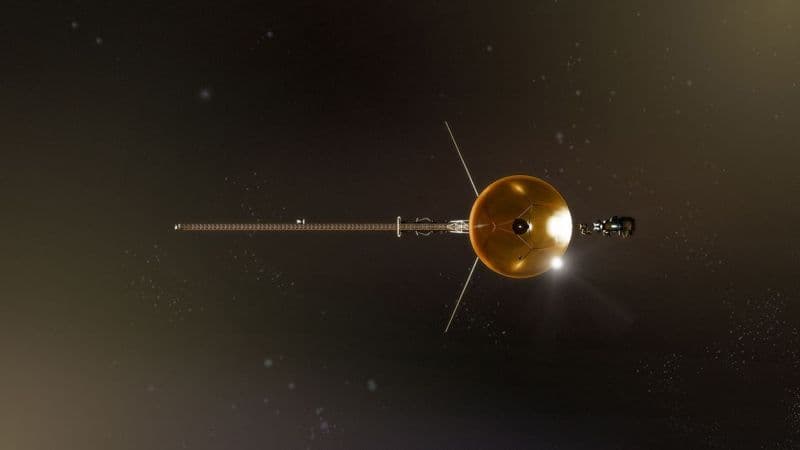
Voyager 1, a NASA deep-space probe, has achieved an unprecedented milestone, reaching one light-day from Earth. This distance is equivalent to roughly 16 billion miles (26 billion kilometers), establishing it as the farthest human-made object.
Launched in September 1977, Voyager 1 and its twin, Voyager 2, were designed for a five-year mission but have far exceeded expectations, now studying interstellar space after leaving the sun's heliosphere. Their continued operation after 49 years is a testament to the dedication of NASA engineers.
To maintain functionality with declining onboard power from its plutonium thermoelectric generators, NASA executed a radical power distribution reshuffle called the "Big Bang." This maneuver saved approximately 10 watts, extending the operational life of its magnetometer and plasma wave subsystem for an estimated two and a half more years.
Despite recent temporary communication losses, which highlight the probe's precarious status, Voyager 1 continues its journey toward the star Gliese 445. This remarkable mission, alongside Voyager 2's expected one light-day milestone in 2035, carries humanity's cultural legacy, including the Golden Record, into the vastness of space.


