

Home / Science / Viking Coin Hints at Early Christian Link
Viking Coin Hints at Early Christian Link
16 Apr
Summary
- A gold coin pendant found in Norfolk depicts John the Baptist.
- The coin dates to the late 9th century, a Viking era in East Anglia.
- This finding suggests earlier Viking conversion to Christianity than known.
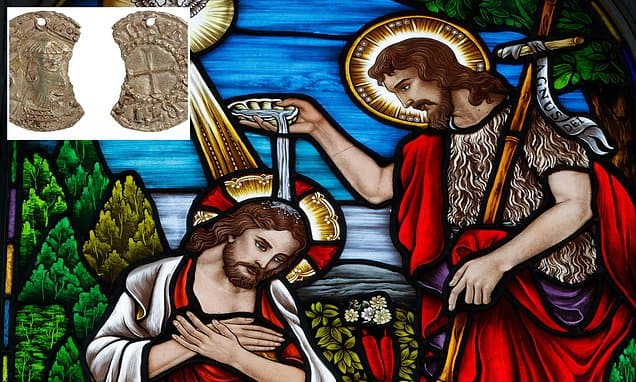
A recent discovery in Norfolk, UK, has presented compelling evidence that Viking contact with Christianity may predate current historical understanding by several decades. A metal detectorist found an incomplete gold coin, fashioned into a pendant, which analysis places between the 860s and 870s AD.
This period coincides with the Viking conquest of the kingdom of East Anglia. The coin is extraordinary as it features the face of a bearded man with the inscription 'IOAN,' short for John, and a partial inscription translating to 'Baptist and Evangelist'.
Historians have long believed Vikings in this era were largely pagan, worshipping Norse gods. The depiction of John the Baptist, a significant figure in early Christianity and Jesus's cousin, is highly unusual for ninth-century Western European coinage, which typically depicted secular rulers.
Coin historian Dr. Simon Coupland noted the peculiarity of Scandinavians, who were not yet Christian, creating such an artifact. This finding suggests that some Vikings might have been converted to Christianity much earlier than the tenth century, when settled conversion is generally believed to have occurred.
While the pendant does not offer definitive proof of widespread religious conversion, it is a significant piece of evidence suggesting an earlier overlap and mutual influence between Viking culture and Christianity. This discovery echoes other recent findings, such as an 1,800-year-old silver amulet in Germany containing early Christian inscriptions, further pushing back the timeline of Christianity's spread.

