Home / Science / ISS Retirement Looms: Commercial Space Stations Lag
ISS Retirement Looms: Commercial Space Stations Lag
21 Mar
Summary
- Commercial space stations are needed to replace the aging ISS.
- China's Tiangong space station is operational and advancing research.
- US commercial space station development faces delays due to funding.

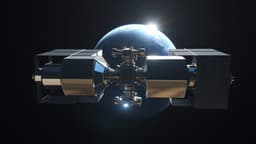
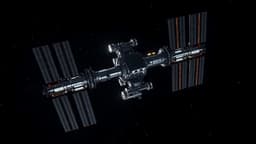
The United States is at risk of losing its continuous presence in low-Earth orbit (LEO) as the International Space Station (ISS) approaches its planned retirement by 2030. Commercial space stations are intended to fill this void, but their development is facing significant hurdles. NASA's delay in issuing requests for proposals for these future stations, exacerbated by factors like a government shutdown and confirmation delays for its administrator, has created uncertainty for private companies.
This situation is particularly concerning given China's operational Tiangong space station, completed in 2022, which is already hosting astronauts and advancing research. Experts warn that without a US-based orbital outpost, the nation risks ceding leadership in space technology and potentially facing national security implications. Companies like Axiom Space and Vast are actively seeking funding, with Vast aiming to launch a minimal viable station soon, independent of federal input.
However, the long-term viability of these commercial ventures largely depends on securing contracts from NASA and other government agencies, as private sector demand is currently limited. The space agency is expected to award contracts between 2026 and 2031, totaling up to $1.5 billion, to determine the future landscape of LEO.
Despite the challenges, the ISS continues to face operational issues due to its age, with recent reports highlighting leaks and the need for costly maintenance. A premature decommissioning before a commercial successor is fully operational could jeopardize crucial research, including that needed for the Artemis program. Russia's commitment to the ISS past 2028 also remains uncertain, adding another layer of complexity to maintaining a continuous human presence in space.