Home / Science / Inside-Out Planet System Baffles Scientists
Inside-Out Planet System Baffles Scientists
13 Feb
Summary
- A red dwarf star system features an unusual planet arrangement.
- The outermost planet is rocky, defying typical formation theories.
- Planets may have formed sequentially in a gas-depleted environment.
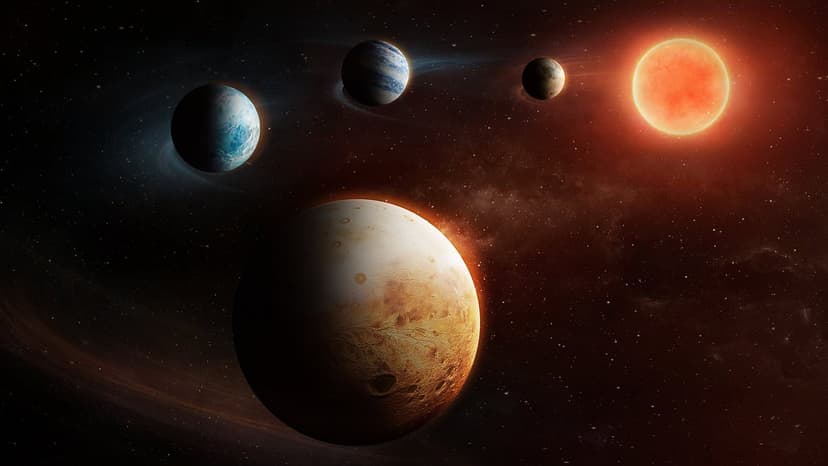
A peculiar planetary system, named LHS 1903, has left astronomers bewildered due to its 'inside-out' configuration. Orbiting a faint red dwarf star, this system features four planets that challenge conventional formation models. Typically, rocky planets reside closer to their star, with gaseous giants further out, a pattern observed in our own Solar System.
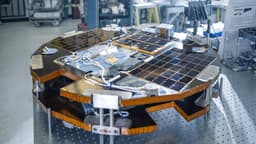
However, LHS 1903 presents a rocky planet as its outermost world, preceded by two gas giants and an inner rocky planet. Experts from the University of Warwick, utilizing the European Space Agency's Cheops satellite, discovered this anomaly. Initial theories about swapped planet positions or atmospheric loss were discarded.
The prevailing hypothesis suggests that the planets formed sequentially. It's proposed that by the time the final outer planet accreted, the system had likely depleted its available gas, essential for planet formation. This suggests the rocky outermost planet formed in a gas-scarce environment, a first of its kind discovery.