feedzop-word-mark-logo
searchLogin
Feedzop
homeFor YouIndiaIndia
You
bookmarksYour BookmarkshashtagYour Topics
Trending
trending

Navi Mumbai Airport opens today

trending

New airlines launch in India

trending

Gemini AI Android multitasking boost

trending

Libyan officials die in Turkey

trending

Cincinnati last white Christmas flashback

trending

Cameroon vs Gabon AFCON

trending

Nigeria open banking potential

trending

Vaibhav Suryavanshi youngest List centurion

trending

Al-Nassr fined by AFC

Terms of UsePrivacy PolicyAboutJobsPartner With Us

© 2025 Advergame Technologies Pvt. Ltd. ("ATPL"). Gamezop ® & Quizzop ® are registered trademarks of ATPL.

Gamezop is a plug-and-play gaming platform that any app or website can integrate to bring casual gaming for its users. Gamezop also operates Quizzop, a quizzing platform, that digital products can add as a trivia section.

Over 5,000 products from more than 70 countries have integrated Gamezop and Quizzop. These include Amazon, Samsung Internet, Snap, Tata Play, AccuWeather, Paytm, Gulf News, and Branch.

Games and trivia increase user engagement significantly within all kinds of apps and websites, besides opening a new stream of advertising revenue. Gamezop and Quizzop take 30 minutes to integrate and can be used for free: both by the products integrating them and end users

Increase ad revenue and engagement on your app / website with games, quizzes, astrology, and cricket content. Visit: business.gamezop.com

Property Code: 5571

Home / Science / Underwater DNA Hunt Aims to Locate Missing WWII Troops

Underwater DNA Hunt Aims to Locate Missing WWII Troops

10 Nov

Summary

  • Scientists test eDNA to detect decades-old human DNA at WWII wreck sites
  • Pilot project investigates 12 wrecks in 3 underwater environments
  • Findings offer hope but also raise new puzzles about DNA preservation
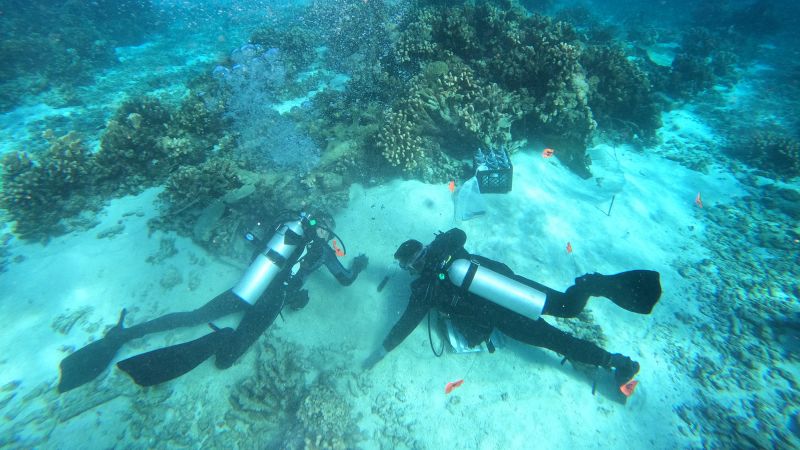
Underwater DNA Hunt Aims to Locate Missing WWII Troops

In 2025, scientists are conducting a cutting-edge endeavor to understand whether traces of decades-old DNA can be preserved and detected at underwater wreck sites from World War II. The pilot project, led by researchers from the Woods Hole Oceanographic Institution, is investigating 12 wrecks in three very different underwater environments: the western Pacific Ocean off Saipan, Lake Huron, and the Italian Mediterranean.

The researchers are testing innovative technology that uses environmental DNA, or eDNA, found in soil, sediment, and water as a biological scouting mechanism. If successful, the method could help locate the remains of missing service members, including the two crew members presumed lost when a Grumman TBF Avenger warplane crashed in Saipan's harbor during the 1944 Battle of Saipan.

Initial results from the analysis of the samples collected from the wreck sites have offered a glimmer of hope, with the researchers able to detect and differentiate between contemporary human DNA and older sequences. However, the findings have also ignited some new and puzzling questions, as the team grapples with unexpected patterns in the data.

While the research has demonstrated the potential of eDNA as a tool for locating human remains at underwater wreck sites, the scientists caution that further study and excavation are necessary to establish the method's efficacy and correlate the DNA findings with actual recoveries. The DPAA, the agency tasked with recovering the remains of American troops presumed lost at sea, is now evaluating the research and considering the next steps in this innovative approach to solving cold cases from World War II.

Disclaimer: This story has been auto-aggregated and auto-summarised by a computer program. This story has not been edited or created by the Feedzop team.
The Grumman TBF Avenger was a World War II torpedo bomber that crashed in Saipan's harbor during the 1944 Battle of Saipan, with two of its three crew members presumed lost.
Researchers are testing eDNA technology as a way to detect and locate traces of decades-old human DNA at underwater wreck sites, which could help the DPAA agency find the remains of missing service members.
The initial results have offered a glimmer of hope, with researchers able to detect and differentiate between contemporary human DNA and older sequences, but the findings have also raised new puzzles about DNA preservation in different underwater environments.

Read more news on

Scienceside-arrowPacific Oceanside-arrowWorld War IIside-arrow
•

You may also like

Glacier Floods Surge: Climate Change Unleashes Deadly GLOFs

22 Dec • 24 reads

article image

Pearl Harbor Survivor Dies at 105

21 Dec • 41 reads

article image

WWII Ship Transformed into Memorial Reef

22 Dec • 9 reads

article image

WWI War Crime: German Officers Convicted

15 Dec • 52 reads

article image

Ocean Floor Biodiversity Collapses After Mining Test

11 Dec • 81 reads

article image