Home / Science / Maps Lie: How Cartography Shapes Our Reality
Maps Lie: How Cartography Shapes Our Reality
14 Dec
Summary
- Traditional maps present a deceptive, tidy view of the world.
- Cartography needs to embrace uncertainty, subjectivity, and multiplicity.
- Countermapping empowers marginalized groups to be seen by authorities.
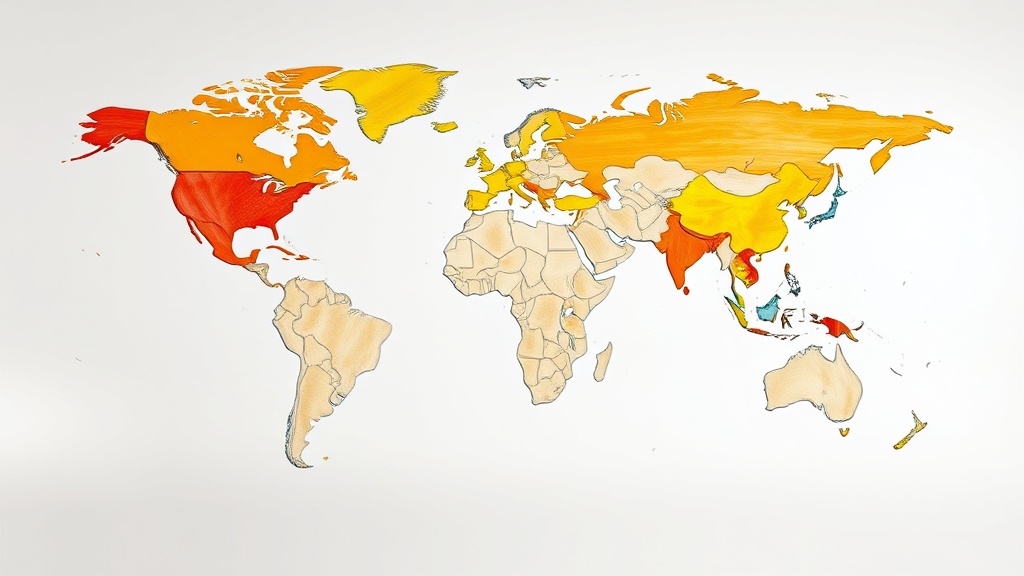
The way we visualize the world through maps is being challenged, as new knowledge demands more nuanced representations. Traditional maps, originating from 18th-century educational aids, present a simplified, often misleading, view of countries and global data. This approach is criticized for causing significant damage to our understanding of complex realities and inequalities.
A growing movement advocates for a "mapping revolution," seeking to replace state-centric views with an emphasis on mobility and human connections. This new cartography aims to embrace uncertainty, subjectivity, and multiplicity, acknowledging that data collection and visualization are inherently human and interpretive processes.
This shift is also empowering marginalized communities. "Countermapping" initiatives, where groups create their own maps, have been instrumental in challenging official narratives and highlighting overlooked populations. Such efforts demonstrate the evolving role of maps in reflecting a more complex and interconnected world.