Home / Science / Tidal Power: Ocean's Predictable Energy Source
Tidal Power: Ocean's Predictable Energy Source
15 Sep
Summary
- Tidal energy offers a predictable power source, unlike wind or solar.
- High construction costs are a major barrier to widespread adoption.
- The technology has passed the demonstration stage but isn't commercialized.
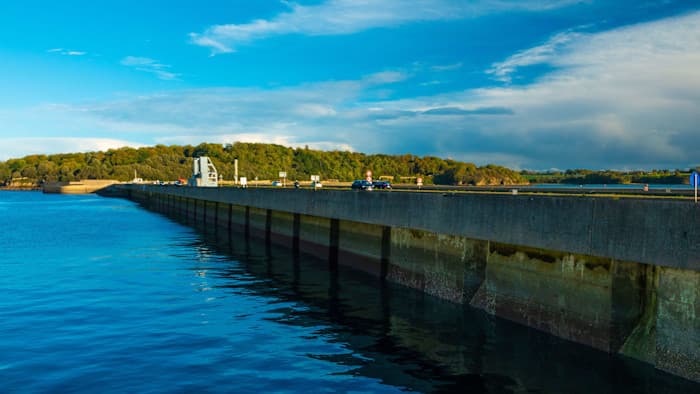
Ancient Irish monks utilized tidal forces for grain milling, a technology that has evolved into a predictable source of renewable energy. Modern tidal energy plants, like the one in La Rance, France, demonstrate its potential, powering hundreds of thousands of homes. Coastal regions worldwide are exploring tidal energy to stabilize fluctuating renewable power grids.
However, the widespread adoption of tidal energy is hindered by prohibitively high construction costs. Marine energy companies are working to reduce expenses by scaling supply chains and developing more affordable modular floating turbines. While tidal power is highly predictable due to lunar and solar gravitational influence, scaling up requires significant investment in infrastructure and careful environmental planning to protect marine ecosystems.
Tidal energy operates through two main methods: tidal range and tidal stream. Tidal range facilities use dams or barrages to capture energy from the difference between high and low tides, similar to conventional hydropower. Tidal stream technologies, conversely, harness the kinetic energy of moving water using underwater turbines, often in narrower channels where currents are faster. These are typically smaller, modular projects.
Despite its advantages, tidal energy faces challenges. Its commercial scale is yet to be reached, necessitating government funding and subsidies due to high upfront costs. Environmental impacts, particularly from barrages, can affect migratory species and habitats, though spatial planning can mitigate these issues. Experts anticipate cost reductions as the technology and supply chains mature, mirroring the trajectory of solar energy.
Tidal energy has the potential to be a key component in a diverse renewable energy mix, enhancing grid stability. While unlikely to dominate any energy landscape, it can serve as a crucial backbone in hybrid systems, ensuring critical services during disruptions. Its expansion could significantly bolster energy resilience for vulnerable island nations, provided construction costs continue to decrease.
The technology has moved beyond the demonstration phase but awaits large-scale commercialization. Decades-old operational projects confirm its viability, yet further investment in supply chains is essential to lower installation costs and increase accessibility. The development of modular, floating turbine systems is seen as a critical factor in this cost reduction and broader deployment.
Tidal energy offers nations greater independence from energy imports. While some prime locations for tidal power may conflict with tourism, the technology also presents opportunities, with facilities like La Rance attracting visitors. Governments in Europe and Asia are actively supporting tidal energy through grants and revenue guarantees, aiming to transition the industry from government dependence to private investment and self-sustainability.


