Home / Science / Supermassive Black Hole Devours Massive Star in Record-Breaking Cosmic Flare
Supermassive Black Hole Devours Massive Star in Record-Breaking Cosmic Flare
10 Nov
Summary
- Largest and most distant flare ever observed from a supermassive black hole
- Flare originated 10 billion light-years away, shining with the brightness of 10 trillion suns
- Likely caused by a supermassive black hole consuming a massive star
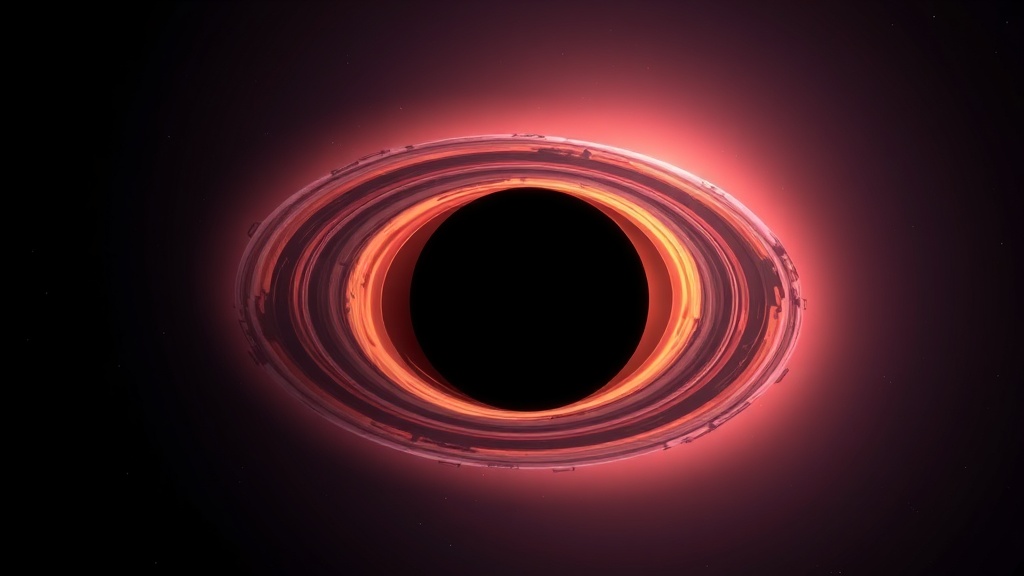
In a groundbreaking discovery, astronomers have spotted the largest and most distant flare ever observed from a supermassive black hole. The flare, nicknamed "Superman," originated 10 billion light-years from Earth and at its peak, the emitted light shone with the brightness of 10 trillion suns.
The source of this record-breaking event is an active galactic nucleus (AGN) - a bright, compact region at the center of a galaxy powered by a supermassive black hole actively consuming material. As gas and dust spiral into the black hole, they become superheated, releasing intense radiation in the form of a powerful flare.
Researchers believe the black hole likely consumed a massive star, at least 30 times the size of our Sun, in a tidal disruption event. This is the most massive star ever seen shredded by a supermassive black hole, providing new insights into the presence of giant stars near the hearts of galaxies.