Home / Science / Star's Death Caught: Fades into Black Hole
Star's Death Caught: Fades into Black Hole
13 Feb
Summary
- Researchers observed a star fading into a black hole, a rare phenomenon.
- The discovery was accidental, occurring during a study of Andromeda Galaxy stars.
- This offers the strongest observational record of a star collapsing without exploding.
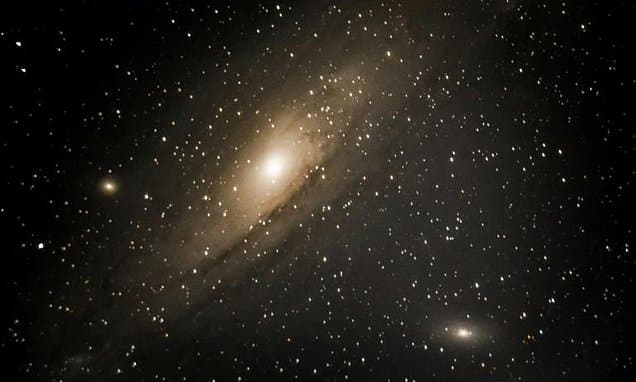
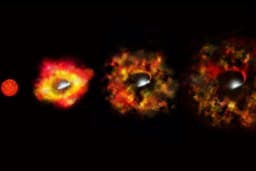
Researchers have captured the most compelling evidence to date of a star collapsing directly into a black hole. This rare astronomical event, often termed a "failed supernova," was observed in the neighboring Andromeda Galaxy, approximately 2.5 million light-years away.
The discovery was serendipitous, originating from a study focused on infrared light in Andromeda. Instead of a typical stellar event, scientists detected an unusual object that brightened and then faded until it disappeared entirely. This observation, meticulously pieced together from over a decade of archival data from NASA's NEOWISE mission, offers a unique glimpse into a star's final moments.
This finding significantly strengthens observational records of stars transforming into black holes without a dramatic explosion. The observed star was notably smaller than typically anticipated for such a collapse, suggesting a wider range of stellar masses can form black holes than previously assumed. This opens new avenues for identifying similar events by looking for infrared brightening associated with the process, rather than just the disappearance.