Home / Science / Musk Aims for Cosmic Power: SpaceX's Kardashev Leap
Musk Aims for Cosmic Power: SpaceX's Kardashev Leap
10 Jul
Summary
- SpaceX plans 1 million satellites for space data centers.
- This is a step toward becoming a Kardashev II civilization.
- Earth is currently estimated at Type 0.7276 on the scale.
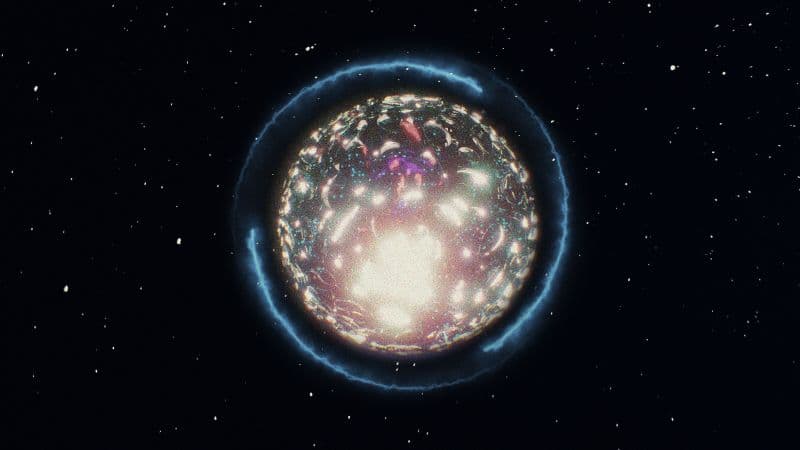
Elon Musk's vision for SpaceX's future, and humanity's, is inspired by the Kardashev scale, a 1960s concept by Soviet astronomer Nikolai Kardashev to classify civilizations by their energy production. Musk has referenced this scale, stating SpaceX's goal of launching up to 1 million satellites for in-space data centers is a "first step towards becoming a Kardashev II-level civilization."
The Kardashev scale categorizes civilizations into Type I (planetary energy use), Type II (stellar energy use), and Type III (galactic energy use). While experts like Zaza Osmanov of the SETI Institute find the scale a valuable tool for assessing technological levels, current estimates place humanity at a Type 0.7276, projected to reach only 0.7449 by 2060.
Achieving higher Kardashev levels presents significant challenges. Reaching Type I is estimated to take millennia without major breakthroughs. Musk's aspiration for Type II, potentially involving space-based solar energy harvesting, is a concept some experts, like planetary physicist Philip Metzger, believe could be leapfrogged by moving industry off-planet to avoid Earth's destruction.
Searches for extraterrestrial intelligence continue, with projects like analyzing stars for Dyson spheres, hypothetical megastructures built by advanced civilizations. A 2024 study identified seven potential candidates in the Milky Way, though they remain unconfirmed. The possibility of Type II or III civilizations existing is plausible given the universe's scale, but observational evidence remains elusive, suggesting they might be rare or fundamentally different.


