feedzop-word-mark-logo
searchLogin
Feedzop
homeFor YouIndiaIndia
You
bookmarksYour BookmarkshashtagYour Topics
Trending
Terms of UsePrivacy PolicyAboutJobsPartner With Us

© 2026 Advergame Technologies Pvt. Ltd. ("ATPL"). Gamezop ® & Quizzop ® are registered trademarks of ATPL.

Gamezop is a plug-and-play gaming platform that any app or website can integrate to bring casual gaming for its users. Gamezop also operates Quizzop, a quizzing platform, that digital products can add as a trivia section.

Over 5,000 products from more than 70 countries have integrated Gamezop and Quizzop. These include Amazon, Samsung Internet, Snap, Tata Play, AccuWeather, Paytm, Gulf News, and Branch.

Games and trivia increase user engagement significantly within all kinds of apps and websites, besides opening a new stream of advertising revenue. Gamezop and Quizzop take 30 minutes to integrate and can be used for free: both by the products integrating them and end users

Increase ad revenue and engagement on your app / website with games, quizzes, astrology, and cricket content. Visit: business.gamezop.com

Property Code: 5571

Home / Science / Space Babies: Fertility's Final Frontier?

Space Babies: Fertility's Final Frontier?

4 Feb

Summary

  • Human fertility in space is becoming an urgent practical concern for Mars missions.
  • Space radiation may cause extreme developmental abnormalities in newborns.
  • IVF technology is poised to play a critical role in future space exploration.
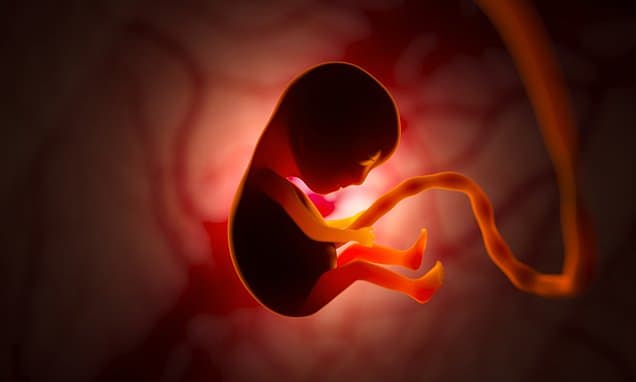
Space Babies: Fertility's Final Frontier?

As humanity advances toward long-duration space missions, particularly to Mars, the issue of human reproduction in space is shifting from theoretical to practical. Experts highlight critical knowledge gaps concerning male and female fertility, as well as embryo and infant development under conditions of low gravity and high radiation.

Concerns have been raised that prolonged exposure to space radiation could result in extreme developmental abnormalities for newborns, potentially making them ill-suited for Earth's gravity. International collaboration is deemed essential to close these knowledge gaps and establish ethical guidelines for professional and private astronauts.

While current evidence suggests short-term missions have minimal impact on male fertility, extended stays pose potential hazards. Data on female astronauts indicates comparable pregnancy rates to Earth, but longer missions necessitate a deeper understanding of spaceflight's effects on reproductive endocrinology and assisted reproductive technologies.

In vitro fertilization (IVF) is anticipated to play a vital role in future space endeavors, with apparatus on the International Space Station already comparable to Earth-based IVF labs. The Moon is proposed as an initial testing ground for reproductive studies in reduced gravity, paving the way for sustained life on Mars.

Disclaimer: This story has been auto-aggregated and auto-summarised by a computer program. This story has not been edited or created by the Feedzop team.
Yes, human fertility in space is no longer theoretical but an urgently practical concern for long-duration missions, such as those planned for Mars.
Space radiation may cause extreme developmental abnormalities in newborns, and there are unknown effects on developing human embryos due to low gravity and high radiation.
IVF technology is poised to play a critical role in future human space exploration, with apparatus on the ISS already comparable to Earth-based IVF labs.

Read more news on

Scienceside-arrow
•
trending

Cognizant profit rises 18.7%

trending

HAL shares tumble after AMCA

trending

Bharat Taxi launches in Delhi

trending

Qualcomm stock falls on shortages

trending

JSW Cement Q3 profit rises

trending

Bridgerton Season 4 returns

trending

Trent share price cautious outlook

trending

Pakistan India T20 boycott

trending

Thunder versus Spurs preview

You may also like

ISS Crew Safe Amidst Major Solar Storm

20 Jan • 114 reads

article image

Tooth Glue and IVs: Space Medicine's Reality

15 Jan • 153 reads

article image

ISS Deorbit Countdown: Astronauts Prep for Fiery End

8 Jan • 181 reads

article image

ISS Sunrise: Japan's Astronaut Shares Cosmic New Year

4 Jan • 171 reads

article image

Mars Time: Clocks Tick Faster on Red Planet

31 Dec, 2025 • 206 reads

article image