Home / Science / Eclipses: Ancient Awe to Modern Science
Eclipses: Ancient Awe to Modern Science
13 Aug
Summary
- A partial solar eclipse occurred in Britain on Wednesday.
- Full eclipses were visible in Greenland, Iceland, and Spain.
- Eclipses have fascinated humans from ancient myths to modern physics.
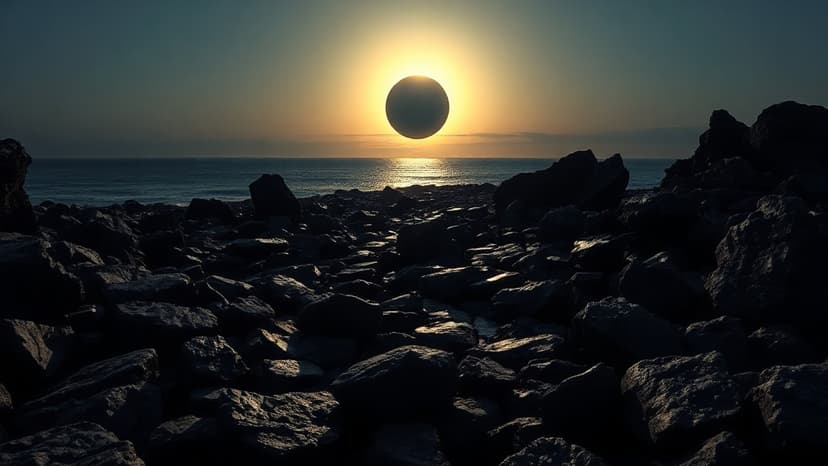
A partial solar eclipse graced the skies over Britain on Wednesday, evoking a sense of magical eeriness and uniting crowds in shared awe. While the most dramatic views of totality were reserved for Greenland, Iceland, and Spain, the partial eclipse in Britain offered a glimpse of celestial wonder, with the moon obscuring a portion of the sun.
Historically, eclipses have been interpreted through myths and legends, from dragons in China to demons in India. However, ancient Greek philosopher Anaxagoras first proposed a scientific explanation. Later, figures like Columbus exploited eclipse knowledge for their gain.
Britain played a role in advancing eclipse science, notably with the discovery of helium during an 1868 expedition to India. Further expeditions in 1919 provided crucial observations supporting Einstein's theory of general relativity, demonstrating how gravity deflects light.
These celestial events transcend divisions, bringing people together in amazement and highlighting experiences that belong to all of humanity. The next deep partial eclipse visible in Britain is 55 years away, and a total solar eclipse will not be seen for 64 years.


