Home / Science / Snow Moon Rises Feb 1st: Ancient Names Explained
Snow Moon Rises Feb 1st: Ancient Names Explained
30 Jan
Summary
- The February Snow Moon appears on February 1st, named for heavy winter snowfall.
- Its name originates from the 1760s, linked to increased snow reported by the Dakota tribe.
- A full moon occurs when the Moon is opposite the Sun, fully illuminated.
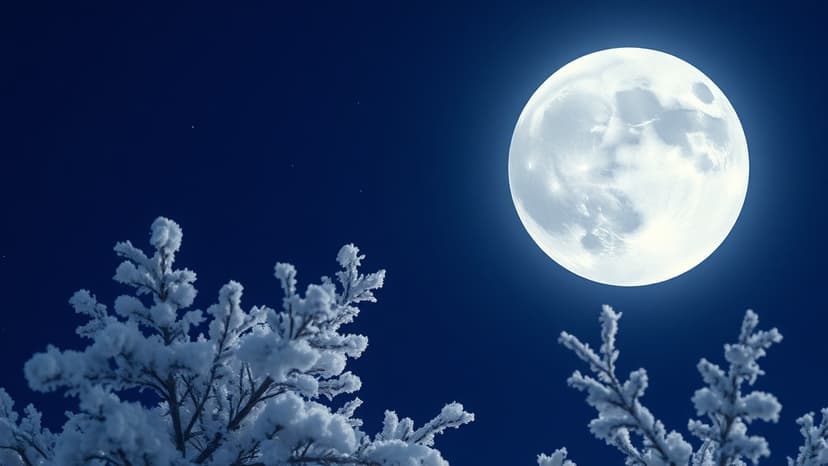
The February full moon, known as the Snow Moon, will be visible on February 1st. This celestial event gets its name from the significant snowfall typically experienced during this month in many regions.
The tradition of naming this full moon dates back to the 1760s. Historical accounts mention the Dakota tribe referring to this time as the Snow Moon due to the increased snowfall observed compared to other winter months.
A full moon happens when the Moon is positioned directly opposite the Sun in its orbital path around Earth. This alignment results in the side of the Moon facing Earth being completely illuminated by sunlight.
For optimal viewing of the Snow Moon on February 1st, observers should look towards the east at sunset. The moon will be visible near the constellation Cancer. Avoiding city lights and light pollution will enhance clarity.
Optical illusions can make the Moon appear larger near the horizon, a phenomenon known as the Moon Illusion. Atmospheric conditions can also cause the Moon's limb to appear to move or a glowing halo to form around it.