Home / Science / Siberian Reservoirs: Winter Gas Traps, Spring Explosions
Siberian Reservoirs: Winter Gas Traps, Spring Explosions
21 Jul
Summary
- Greenhouse gases accumulate under Siberian ice during winter.
- Spring ice melt triggers a massive release of stored carbon.
- Small pools act as 'biochemical reactors' for gas exchange.
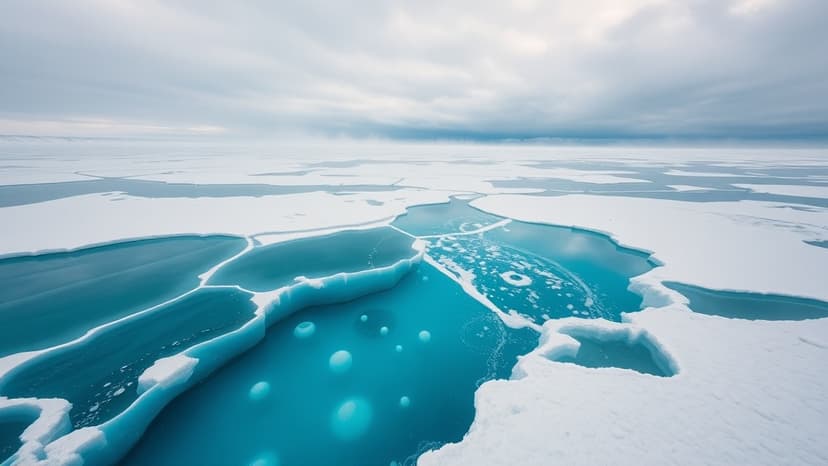
Researchers in Western Siberia have uncovered a critical cycle of greenhouse gas accumulation and release in the region's reservoirs. During the long, cold winters, significant quantities of carbon dioxide and methane build up beneath the ice cover. As spring arrives and the ice melts, these gases are powerfully vented into the atmosphere.
The study, conducted by Tomsk State University, examined water bodies of varying sizes. They found that smaller pools, less than 100 square meters, were the most chemically active. These act as "biochemical reactors" due to their proximity to peat bogs, releasing substantial organic matter and nutrients.
Larger lakes, conversely, exhibited more stable compositions. A key finding is that winter ice acts as a filter, accumulating some elements while others become part of the ice crystals. This process culminates in a massive atmospheric release of gases post-melt, fundamentally altering the understanding of Siberian swamps' climate impact.


