

Home / Science / She Said Seaweed Could Save the World. Here's How.
She Said Seaweed Could Save the World. Here's How.
25 Apr
Summary
- Pia Winberg developed a fast-growing seaweed for food and medical use.
- Her company, Venus Shell Systems, aims for ecological solutions via economics.
- Seaweed farms could act as 'lungs for the ocean,' absorbing CO2.
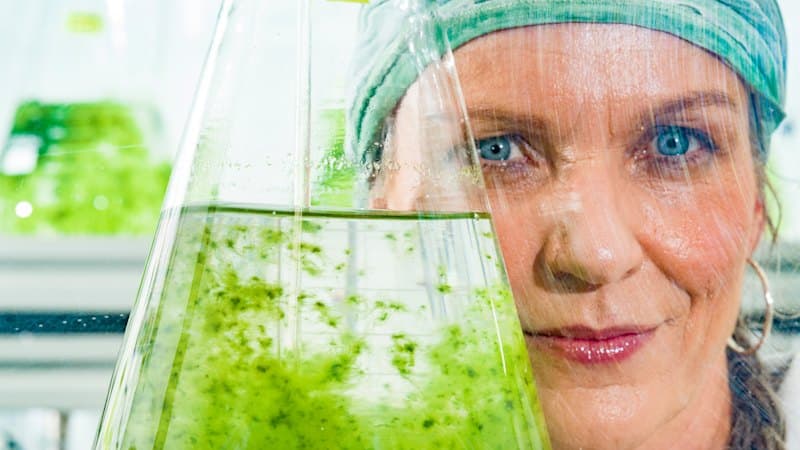
Pia Winberg, a Swedish scientist, is spearheading a multi-faceted approach to address global challenges using a specially cultivated Australian seaweed.
Initially proposed in 2008 for repurposing a decommissioned sewage works into an aquaculture park, Winberg's vision faced political opposition but eventually led to her research.
In 2009, she directed the University of Wollongong's marine research center, analyzing 1500 native Australian seaweeds. Her team identified 'species 84,' a fast-growing sea lettuce unique to Australia, exceptional for its high protein content and nitrogen absorption.
In 2014, Winberg founded Venus Shell Systems to commercialize ecological solutions. The company developed 'species 84' into food products, like the award-winning PhycoTein, and explored its medical applications.
Research with Gordon Wallace revealed a seaweed gel mimicking hyaluronic acid, leading to advancements in wound healing and bio-ink for 3D printing skin tissue. Human skin regeneration trials are planned for 2025.
Funding Winberg's ambitious projects, including mortgaging her house, involved selling cosmetics and food products, engaging investors, and ultimately turning to crowdfunding. The company now has 1550 shareholders.
A significant development in March 2024 was a partnership to build an inland seaweed farm near Ballina, NSW. This farm is designed to process nitrogen waste from a sugar refinery and eventually agricultural runoff.
By mid-2026, this farm is projected to produce 300 tonnes of seaweed annually, sequestering 450 tonnes of CO2. Winberg ultimately envisions coastal seaweed farms functioning as 'lungs for the ocean.'
