Home / Science / Royal Tombs Reveal Identity Mix-Up
Royal Tombs Reveal Identity Mix-Up
21 Jul
Summary
- Eight royal tombs contained 25 remains, many misidentified.
- Queen Elisenda's tomb was found intact, showing modest burial.
- Ancient monastery revealed diverse funerary rites and offerings.
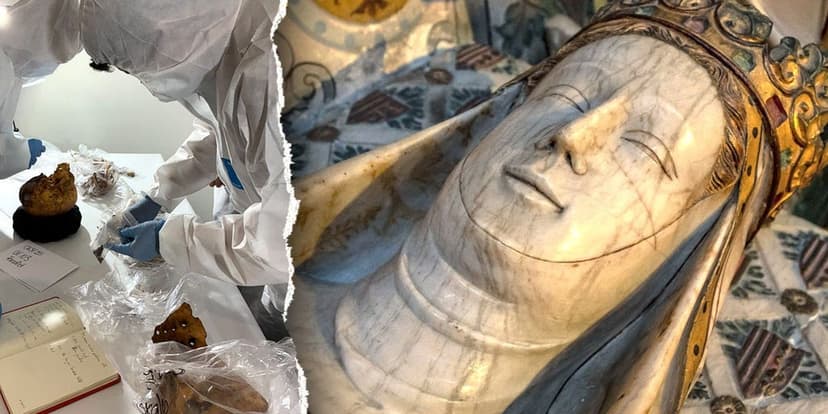
An investigation at Spain's nearly 700-year-old Royal Monastery of Santa Maria de Pedralbes has uncovered a historical puzzle within its royal tombs. Researchers examining eight tombs found 25 individuals, with many of the remains not corresponding to the identities historically attributed to them. This multidisciplinary study, conducted over three years, has yielded unexpected discoveries.
One tomb, identified as belonging to Artau de Foces, surprisingly contained no male individual but instead held the remains of five people: two adult women and three children. Another significant finding was the tomb of Francesca Saportella, the monastery's second abbess, which contained at least nine individuals and mummified remains, but not the abbess herself.
Queen Elisenda de Montcada's tomb, however, was found in excellent condition, dating to the 14th century. Analysis revealed she was buried in simple clothing, despite her royal status, and her remains showed signs of age-related health conditions. Archaeobotanical analysis has helped identify diverse funerary rites, including the use of rosemary and symbolic floral offerings.
DNA testing is continuing, with researchers aiming to recover more of Queen Elisenda's genome by 2027. All findings are being documented with the approval of the monastery's community of nuns, with a commitment to honoring Queen Elisenda's wishes to return all studied remains to their original burial sites. These findings offer significant insights into 14th-century life and medieval Catalan society.


