feedzop-word-mark-logo
searchLogin
Feedzop
homeFor YouIndiaIndia
You
bookmarksYour BookmarkshashtagYour Topics
Trending
trending

AFCAT application closes today

trending

India vs South Africa T20I

trending

Chakaravarthy stars in India's win

trending

AIIMS INI CET Seat Allotment

trending

Hardik Pandya's fastest T20I fifty

trending

Infosys ADR trading halted

trending

India's 5 Trillion Target Delayed

trending

Sanju Samson replaces injured Gill

trending

Quinton de Kock scores

Terms of UsePrivacy PolicyAboutJobsPartner With Us

© 2025 Advergame Technologies Pvt. Ltd. ("ATPL"). Gamezop ® & Quizzop ® are registered trademarks of ATPL.

Gamezop is a plug-and-play gaming platform that any app or website can integrate to bring casual gaming for its users. Gamezop also operates Quizzop, a quizzing platform, that digital products can add as a trivia section.

Over 5,000 products from more than 70 countries have integrated Gamezop and Quizzop. These include Amazon, Samsung Internet, Snap, Tata Play, AccuWeather, Paytm, Gulf News, and Branch.

Games and trivia increase user engagement significantly within all kinds of apps and websites, besides opening a new stream of advertising revenue. Gamezop and Quizzop take 30 minutes to integrate and can be used for free: both by the products integrating them and end users

Increase ad revenue and engagement on your app / website with games, quizzes, astrology, and cricket content. Visit: business.gamezop.com

Property Code: 5571

Home / Science / Roman Soldiers Battled Diarrhea Near Hadrian's Wall

Roman Soldiers Battled Diarrhea Near Hadrian's Wall

19 Dec

•

Summary

  • Ancient parasites found in Roman fort drains caused diarrhea.
  • Infections weakened soldiers, impacting their fitness for duty.
  • Roman sanitation was advanced but failed to prevent parasite spread.
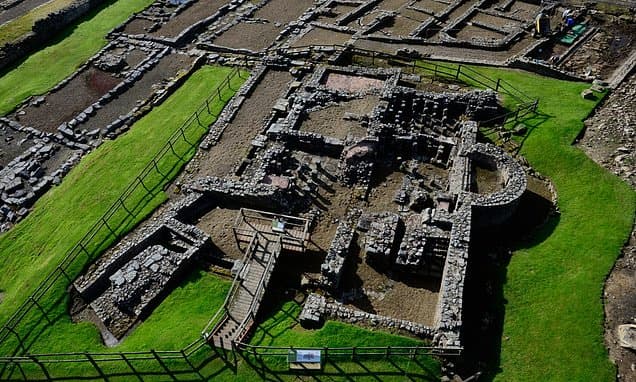
Roman Soldiers Battled Diarrhea Near Hadrian's Wall

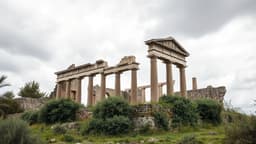
Evidence suggests Roman soldiers defending Hadrian's Wall around 2,000 years ago contended with significant health challenges, specifically diarrhea. Scientists analyzing sediment from sewer drains at the Vindolanda fort uncovered remnants of three types of intestinal parasites: whipworms, roundworms, and Giardia duodenalis. These infections, transmitted through contaminated food, drink, or hands due to ineffective sanitation, would have caused malnutrition and weakened the soldiers, reducing their fitness for duty.

The findings, published in the journal Parasitology, highlight the persistence of symptoms due to limited Roman medical interventions for such parasitic infections. While the Romans pioneered communal toilets with plumbing and sewers, the use of communal cleaning tools like the 'tersorium' likely facilitated disease transmission. This research aligns with similar discoveries at other Roman military sites across the Empire, underscoring the common gastrointestinal risks faced by legionaries.

The presence of Giardia duodenalis marks the first such discovery in Roman Britain, indicating potential for severe illness and dehydration, particularly during summer outbreaks linked to contaminated water. Earlier deposits from a fort abandoned between AD 91 and AD 92 also yielded roundworm and whipworm eggs. These findings offer a stark glimpse into the daily health struggles of soldiers tasked with defending the Roman province of Britannia.

Disclaimer: This story has been auto-aggregated and auto-summarised by a computer program. This story has not been edited or created by the Feedzop team.
Roman soldiers at Hadrian's Wall suffered from diarrhea due to ancient intestinal parasites like whipworms, roundworms, and Giardia duodenalis.
These parasites caused diarrhea, malnutrition, and weakened soldiers, reducing their fitness for duty near Hadrian's Wall.
Romans at Vindolanda had communal toilets with plumbing and sewers, but used shared 'tersorium' sponges, likely spreading infections.

Read more news on

Scienceside-arrow

You may also like

Neanderthals Mastered Fire 400,000 Years Ago

10 Dec • 41 reads

article image

Rare 3rd-Century Jesus Fresco Found in Turkish Necropolis

11 Dec • 44 reads

article image

Lost Bronze Age Culture Discovered in Turkey

10 Dec • 52 reads

article image

Ancient Rome's Roads: More Vast Than Imagined

9 Dec • 18 reads

article image

Cats Conquered the World: Thanks, Romans!

28 Nov • 116 reads

article image