feedzop-word-mark-logo
searchLogin
Feedzop
homeFor YouIndiaIndia
You
bookmarksYour BookmarkshashtagYour Topics
Trending
Terms of UsePrivacy PolicyAboutJobsPartner With Us

© 2026 Advergame Technologies Pvt. Ltd. ("ATPL"). Gamezop ® & Quizzop ® are registered trademarks of ATPL.

Gamezop is a plug-and-play gaming platform that any app or website can integrate to bring casual gaming for its users. Gamezop also operates Quizzop, a quizzing platform, that digital products can add as a trivia section.

Over 5,000 products from more than 70 countries have integrated Gamezop and Quizzop. These include Amazon, Samsung Internet, Snap, Tata Play, AccuWeather, Paytm, Gulf News, and Branch.

Games and trivia increase user engagement significantly within all kinds of apps and websites, besides opening a new stream of advertising revenue. Gamezop and Quizzop take 30 minutes to integrate and can be used for free: both by the products integrating them and end users

Increase ad revenue and engagement on your app / website with games, quizzes, astrology, and cricket content. Visit: business.gamezop.com

Property Code: 5571

Home / Science / Tiny Fish's Wild Head Hole Creates Buzzing Sound

Tiny Fish's Wild Head Hole Creates Buzzing Sound

10 Jan

•

Summary

  • Rockhead poacher uses its skull cavity as a percussion instrument.
  • Ribs strike the cavity, producing a loud buzzing sound for its size.
  • The fish inhabits shallow intertidal parts of the northeastern Pacific.
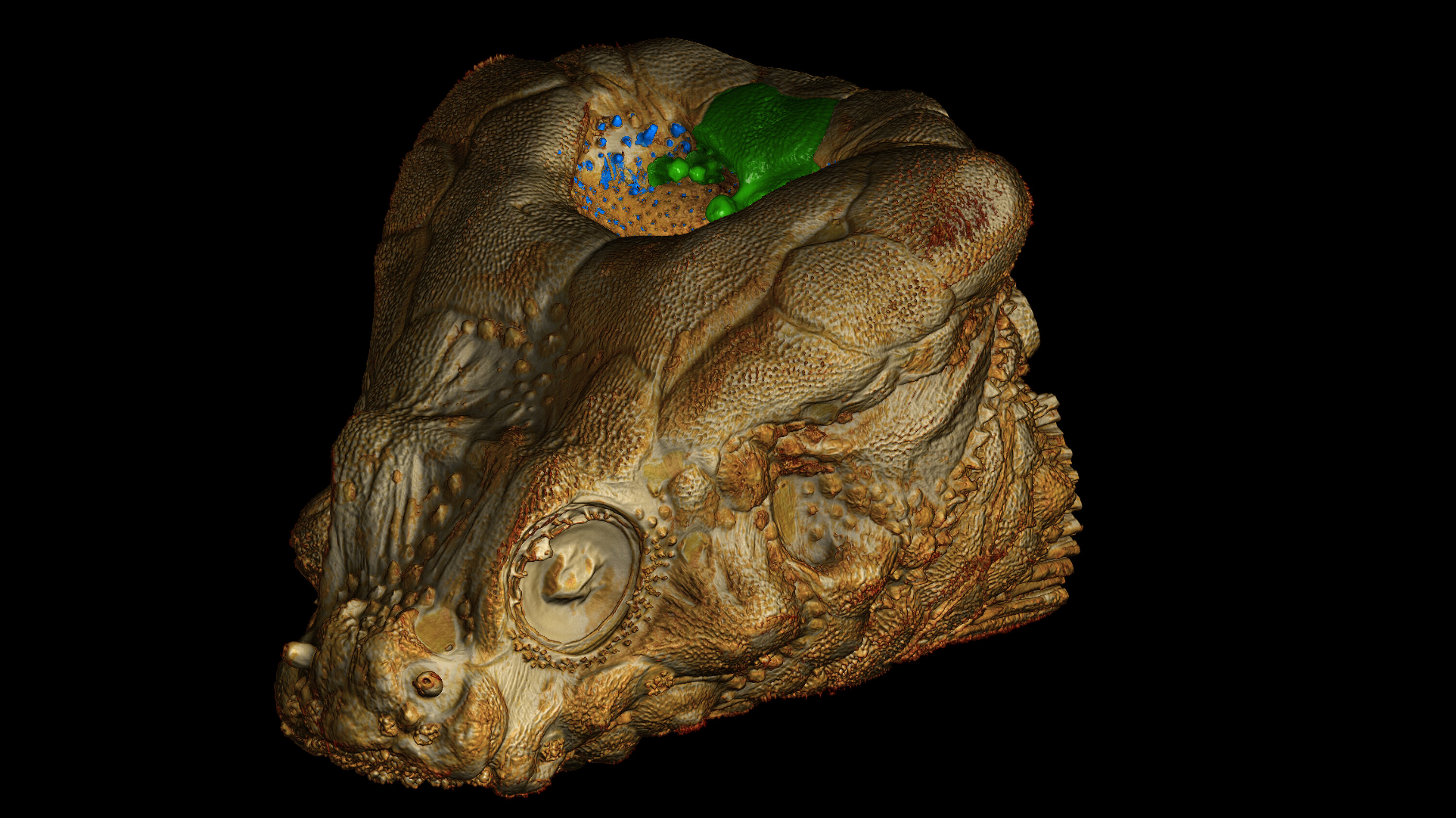
Tiny Fish's Wild Head Hole Creates Buzzing Sound

A unique cavity within the rockhead poacher's skull is now understood to function as a percussive instrument, a finding that has intrigued scientists for years. This small, finger-sized fish, found in the northeastern Pacific Ocean, employs its ribs to strike this cranial hollow, producing a distinctive buzzing sound. This anatomical marvel allows the rockhead poacher to generate noise far exceeding its size.

Researchers meticulously studied the fish's anatomy using micro-CT scans, revealing that its ribs are connected via tendons to powerful muscles. These are positioned to strike the pit, acting like drumsticks against a drum or the internal components of a maraca. Initially, the cavity was thought to be camouflage, resembling a rock crevice, but its internal structures suggested a more complex purpose.

In the challenging and noisy intertidal zone, with crashing waves and other sounds, this sound production system is a clever adaptation. It aids the rockhead poacher in communication and locating other fish by potentially vibrating against the seabed. This discovery highlights the extraordinary and often unexpected behavioral strategies found in marine species.

Disclaimer: This story has been auto-aggregated and auto-summarised by a computer program. This story has not been edited or created by the Feedzop team.
The rockhead poacher uses a cavity in its skull, striking it with its ribs to produce a buzzing sound, much like a percussion instrument.
Rockhead poachers are found in the shallow intertidal parts of the northeastern Pacific Ocean.
Scientists believe the cavity is used to produce sound, aiding communication in its noisy environment, rather than just for camouflage.

Read more news on

Scienceside-arrow
trending

Microsoft AI chief warns safety

trending

Reliance Jio IPO in 2026

trending

Sabalenka wins Brisbane final

trending

DRDO tests scramjet engine

trending

India vs New Zealand scorecard

trending

Siraj gets batting tips

trending

India vs New Zealand ODI

trending

Morgan Stanley RWAs and blockchain

trending

Instagram denies data breach

trending

Wrexham stuns Nottingham Forest

You may also like

Danny Phantom Haunts Fortnite Item Shop!

6 Dec, 2025 • 104 reads

article image

Robosen's Soundwave: Robot, Speaker, Tape Deck!

4 Dec, 2025 • 109 reads

article image

Chalamet: Pursuing Greatness, Redefining Stardom

3 Dec, 2025 • 159 reads

article image

Mom's $100 Christmas Budget Goes Viral!

26 Nov, 2025 • 69 reads

article image

Death Metal's Florida Genesis: Garage to Gore

19 Nov, 2025 • 141 reads

article image