

Home / Science / Robots Outshine Astronauts in New Space Race
Robots Outshine Astronauts in New Space Race
11 Apr
Summary
- Robotic explorers offer cost-effective, continuous operation.
- Space exploration's primary motive is shifting to adventure.
- China and the US are in a race for lunar and Martian missions.
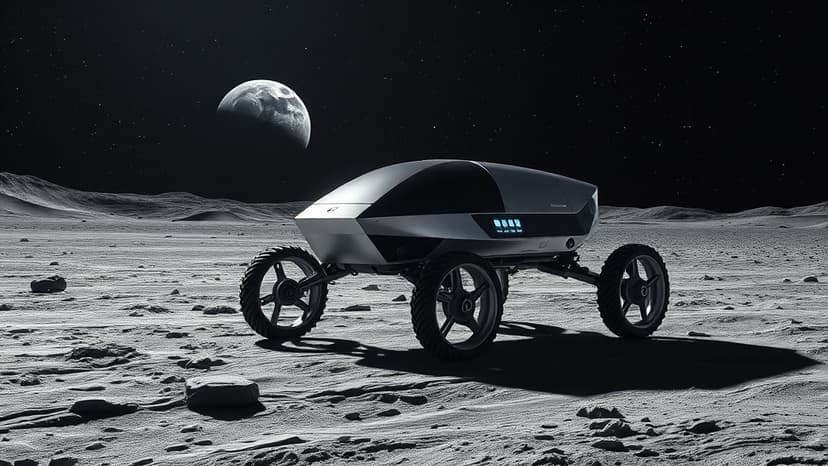
The current decade, the 2020s, is marked by a resurgence in space exploration, often termed the "Apollo spirit." Both the United States and China are actively pursuing missions to the moon, with aspirations for Mars. NASA's Artemis program has seen astronauts loop around the moon, though the risks remain significant due to limited data from its early stages.
Estimated expenditures for the Artemis program approach $100 billion, with substantial future investments planned for a lunar base. Scientific benefits include gaining insights into solar system formation and utilizing the moon as a stable platform for advanced telescopes, particularly on its far side shielded from Earth's interference.
However, the necessity of human presence is increasingly questioned. Robots, capable of round-the-clock work and requiring less support, are becoming more cost-effective. Missions like Curiosity and Perseverance on Mars have demonstrated remarkable longevity and capability with minimal intervention.
China has made significant strides in lunar exploration, deploying multiple robotic missions that have landed and collected soil samples from the lunar far side. Future Chinese plans include examining the lunar south pole and preparing for lunar base construction, with expectations of human missions to match US efforts.
The advancement in robotic explorers, coupled with improvements in AI and sensors, allows for increasingly autonomous operations. Within 10 to 20 years, robotic capabilities could render human intervention in lunar exploration and resource extraction largely unnecessary.
Historically, human intervention was critical for missions like the Hubble Space Telescope's repairs. However, newer, more complex missions like the James Webb Space Telescope, launched in December 2021, are designed for inaccessible orbits, highlighting the capability of robotic missions without crews. The practical case for human spaceflight is diminishing with technological progress, with adventure and private sponsorship becoming its primary drivers.

