Home / Science / Dying Star Reveals Rare Second-Gen Planet
Dying Star Reveals Rare Second-Gen Planet
13 Oct
Summary
- Hubble data revealed unidentified elements around a white dwarf.
- Niobium levels 1,000 times higher than the sun suggest planet formation.
- This is the first suspected second-generation planet around a white dwarf.
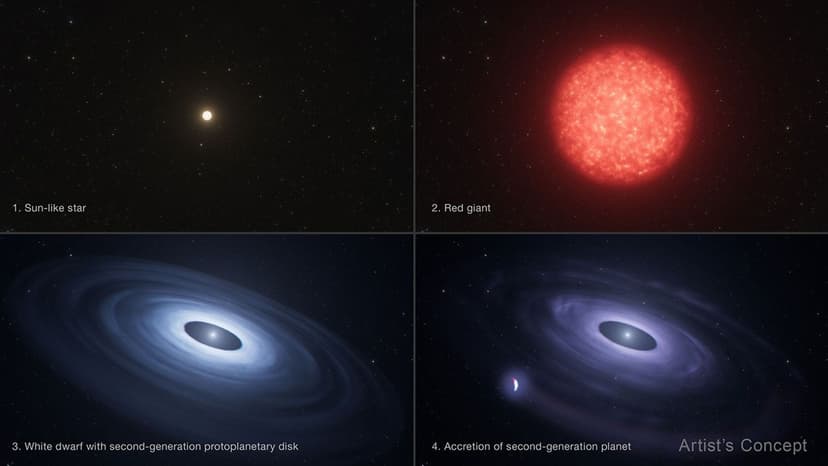
In 1999, NASA's Hubble telescope observed a white dwarf star, HS 0209+0832, detecting 100 unidentifiable chemical features. Decades later, in 2026, a study published in Nature revealed these anomalies point to a second-generation planet. This planet, formed from materials shed by a dying star, is exceptionally rare and was an unexpected discovery around a white dwarf.
Lead author Jamie Williams re-examined Hubble's historical data, comparing it to an updated chemical database. The unidentified features were identified as niobium, present at levels 1,000 times higher than in our sun. Such concentrations suggest the planet accreted from the white dwarf's ejected material. Scientists believe the planet will persist despite the star's intense heat, remaining within the habitable zone for millions of years.


