Home / Science / Whale Songs Hide Daytime Feeding Secrets
Whale Songs Hide Daytime Feeding Secrets
12 Nov
Summary
- Pygmy blue whales sing more at night, suggesting daytime feeding.
- Perth Canyon is a key feeding ground for these whales.
- Night song data can help monitor whale feeding across oceans.
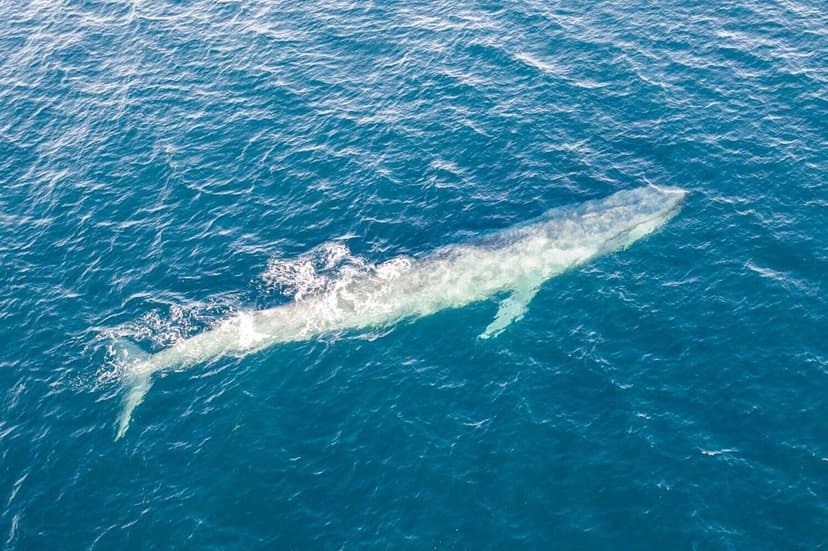
Pygmy blue whales, an endangered subspecies, exhibit a fascinating behavioral rhythm, singing predominantly at night and likely feeding during daylight hours. A study focused on waters off Western Australia, including the significant Perth Canyon feeding ground, revealed this pattern over several months. Researchers observed that nocturnal singing was far more common than diurnal vocalizations, suggesting that feeding activity reduces the whales' available time for communication.
This correlation between nighttime song and daytime feeding offers a valuable tool for conservation efforts. Passive acoustic monitoring, which records underwater sounds, can be used to infer whale feeding activity across large ocean expanses. By analyzing the ratio of night to day songs, scientists can identify likely feeding hotspots, crucial for protecting these whales in areas like the Northwest Shelf, a vital petroleum production zone that also serves as a critical habitat.
Understanding when and where pygmy blue whales feed is essential for managing human activities and ensuring the survival of this vulnerable species. While direct observation is challenging, acoustic data provides an indirect yet powerful method to track their behavior. Further research and observation are ongoing to refine these methods and implement effective conservation strategies, aiming to keep human interference minimal during the whales' critical feeding periods.


