
Home / Science / New Plato Satellite to Seek Earth 2.0
New Plato Satellite to Seek Earth 2.0
1 May
Summary
- Plato satellite launches next year to scan thousands of exoplanets.
- Space exploration advances rapidly with new tech and increased funding.
- Competition intensifies between US and China for lunar dominance.
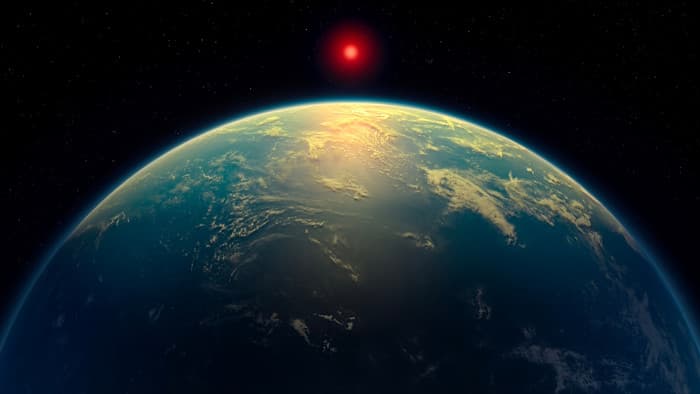
The European Space Agency's Plato satellite is scheduled to launch early next year, equipped with 26 cameras to survey thousands of exoplanets. This initiative aims to identify Earth-like worlds, furthering our understanding of planetary diversity and potentially offering insights into our own planet's future.
The mission highlights a golden age of space travel, with rapid technological progress in rockets, satellites, and AI enabling unprecedented exploration. Public and private investment in space programs, particularly from the US and China, has surged, with both countries planning crewed lunar landings by the end of the decade.
Competition for lunar resources is growing, with projected revenues from mining and tourism reaching billions. While private ventures are making space travel accessible to the privileged, scientists continue to search for extraterrestrial life on Venus and in exoplanet systems.
The James Webb Telescope, launched in 2021, is a crucial tool in analyzing exoplanet atmospheres using spectroscopy. Discoveries range from potentially habitable watery worlds to extreme, inhospitable environments, underscoring the vast variety of planets beyond our solar system.
Nearer to home, NASA plans to establish a Moon base with twice-yearly crewed missions after 2028. However, challenges remain, including the readiness of competing lander systems from SpaceX and Blue Origin for the Artemis IV mission. China also aims for a crewed lunar landing by 2030, with potential competition over landing sites and resources.
Advancements in robotics and AI are also prompting discussions about the necessity of human spaceflight for deep space missions. Despite these debates, human exploration continues, driven by the innate desire to explore the unknown and push the boundaries of possibility. The search for "Earth 2.0" remains a central goal.
