

Home / Science / Titan's Mega-Waves: A New Model Explains Other Worlds
Titan's Mega-Waves: A New Model Explains Other Worlds
21 Apr
Summary
- A new model, PlanetWaves, simulates wave formation across diverse planets.
- Titan's methane lakes can host waves as tall as buildings.
- The model accounts for liquid properties, atmosphere, and gravity.
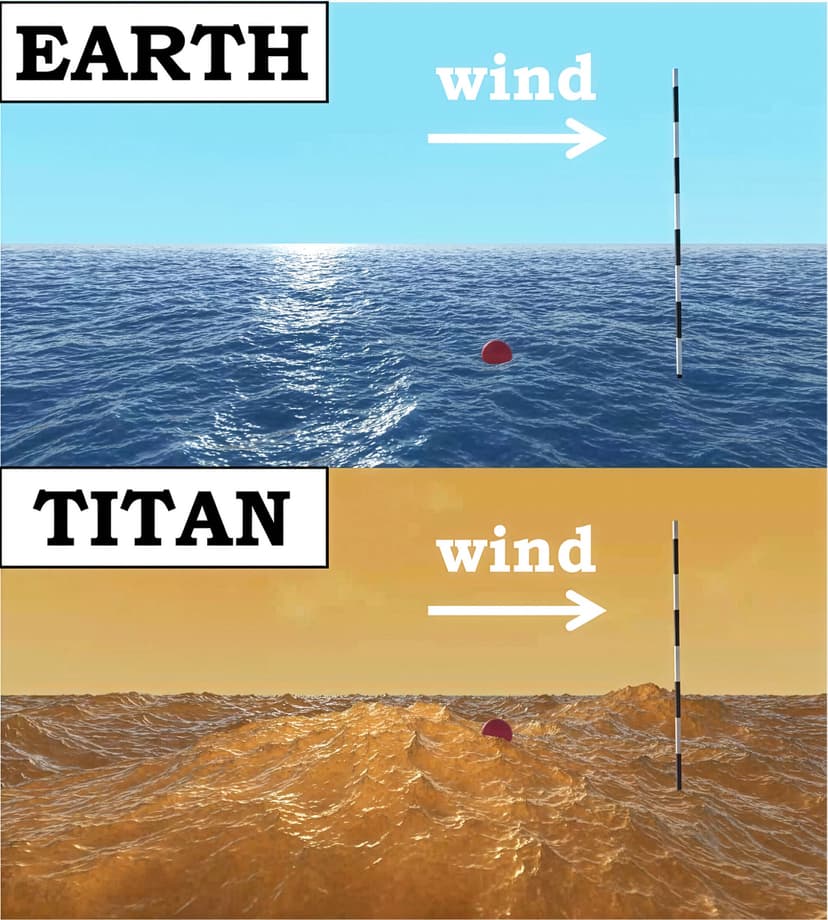
Researchers have created PlanetWaves, the first comprehensive model capable of simulating wave formation and growth on various planets. This groundbreaking tool moves beyond solely considering gravity, incorporating atmospheric thickness and the unique properties of a planet's liquid oceans, such as density and viscosity. This allows scientists to better understand phenomena on celestial bodies like Saturn's moon Titan, where conditions differ vastly from Earth.
On Titan, its methane and ethane lakes, coupled with lower gravity, can produce unexpectedly large waves. Even a gentle wind can generate waves up to 10 feet high that move in slow motion, a stark contrast to Earth's dynamic wave patterns. This research, led by MIT, helps explain features on other worlds and could inform the design of future spacecraft intended to explore Titan's surface.
The PlanetWaves model also offers insights into wave dynamics on planets like Mars, where changing atmospheric pressure impacted wave formation over time. It extends to exoplanets, illustrating how stronger gravity on worlds like LHS 1140 b can limit wave size, while planets with molten rock oceans, such as 55 Cancri e, may experience only minimal surface disturbance even under strong winds. This modeling is vital for deciphering planetary evolution and unique geological features.
