feedzop-word-mark-logo
searchLogin
Feedzop
homeFor YouIndiaIndia
You
bookmarksYour BookmarkshashtagYour Topics
Trending
trending

ChatGPT faces worldwide outages

trending

Alphabet dominates with Gemini 3

trending

OpenAI improves ChatGPT after Gemini

trending

Chennai schools closed due to rain

trending

Rupee collapses beyond 90/USD

trending

Avengers Doomsday trailer breaks tradition

trending

Rupee hits record low

trending

Canara Bank raises ₹3,500 crore

trending

JioHotstar releases Dies Irae

Terms of UsePrivacy PolicyAboutJobsPartner With Us

© 2025 Advergame Technologies Pvt. Ltd. ("ATPL"). Gamezop ® & Quizzop ® are registered trademarks of ATPL.

Gamezop is a plug-and-play gaming platform that any app or website can integrate to bring casual gaming for its users. Gamezop also operates Quizzop, a quizzing platform, that digital products can add as a trivia section.

Over 5,000 products from more than 70 countries have integrated Gamezop and Quizzop. These include Amazon, Samsung Internet, Snap, Tata Play, AccuWeather, Paytm, Gulf News, and Branch.

Games and trivia increase user engagement significantly within all kinds of apps and websites, besides opening a new stream of advertising revenue. Gamezop and Quizzop take 30 minutes to integrate and can be used for free: both by the products integrating them and end users

Increase ad revenue and engagement on your app / website with games, quizzes, astrology, and cricket content. Visit: business.gamezop.com

Property Code: 5571

Home / Science / Pioneering Meteorologist's Cloud Classification System Revolutionizes Weather Prediction

Pioneering Meteorologist's Cloud Classification System Revolutionizes Weather Prediction

17 Oct

•

Summary

  • London pharmacist Luke Howard proposed a cloud classification system in 1803
  • His system uses Latin terms like "cumulus" and "cirrus" to describe cloud types
  • Howard's system has been adopted by the World Meteorological Organization
Pioneering Meteorologist's Cloud Classification System Revolutionizes Weather Prediction

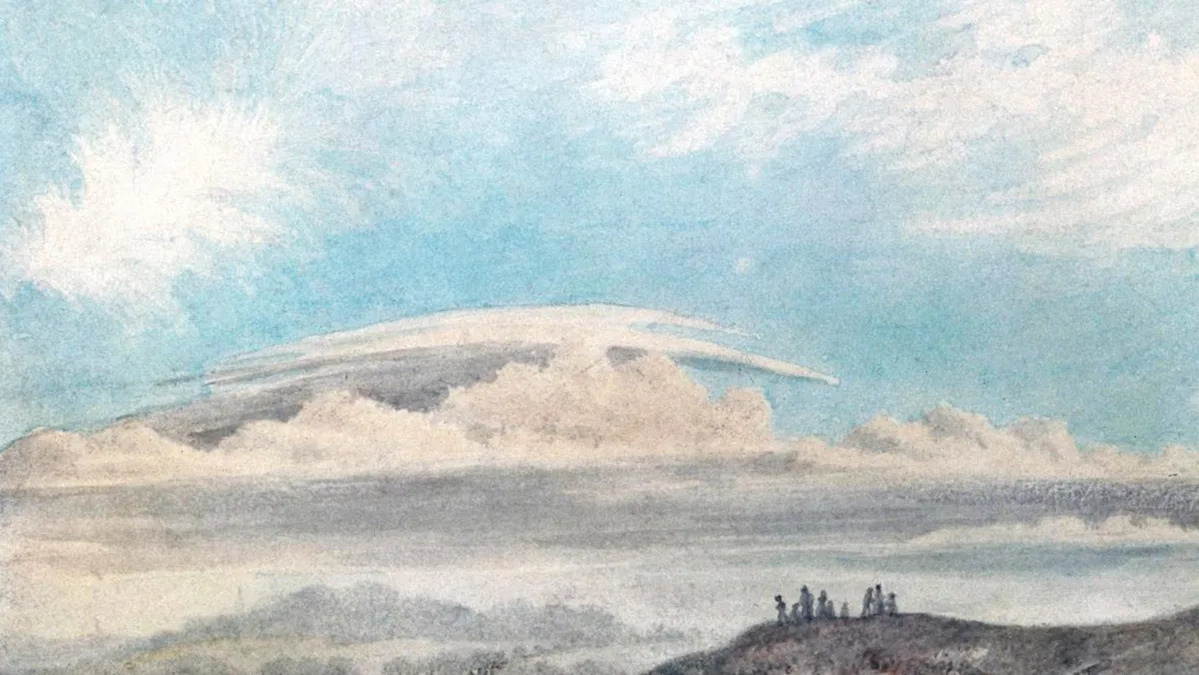
Over 200 years ago, in 1803, a London pharmacist and amateur meteorologist named Luke Howard proposed a revolutionary cloud classification system that would forever change the way we understand and predict the weather. Speaking to the Askesian Society, Howard chose to use Latin terms for his system, as it was the universal language of science at the time, ensuring his work could be understood internationally.

Howard's system introduced the now-familiar cloud names we use today, such as "cumulus" (meaning "heap"), "stratus" ("layer"), and "cirrus" ("curl"). By combining these basic terms, he was able to describe all cloud varieties, from "cumulonimbus" (heap-rain cloud) to "altocumulus" (high heaps). This innovative approach has been adopted by the World Meteorological Organization and is now the foundation of the "International Cloud Atlas," which has been updated multiple times since its first edition in 1896.

Howard's groundbreaking work has had a lasting impact on the field of meteorology. By recognizing 10 main cloud types, which are further divided into species and varieties, his system has enabled weather forecasters to better understand atmospheric conditions and predict changes hours in advance. Today, over 100 different cloud classifications are used to paint a detailed picture of the skies, all thanks to the pioneering efforts of this 19th-century pharmacist-turned-meteorologist.


Disclaimer: This story has been auto-aggregated and auto-summarised by a computer program. This story has not been edited or created by the Feedzop team.
Luke Howard, a 19th-century London pharmacist, proposed a groundbreaking cloud classification system in 1803 that introduced the now-familiar terms like "cumulus" and "cirrus" to describe different cloud types.
Howard's system has been adopted by the World Meteorological Organization and is the foundation of the "International Cloud Atlas," which has been updated multiple times since its first edition in 1896.
By recognizing over 100 different cloud classifications, Howard's system has enabled weather forecasters to better understand atmospheric conditions and predict changes hours in advance, revolutionizing the field of meteorology.

Read more news on

Scienceside-arrow

You may also like

BoM Website Blunder: $96M Fiasco Under Fire

1 day ago • 5 reads

article image

Antarctic Ozone Hole Shrinks Dramatically in 2025

25 Nov • 32 reads

article image

Tropical Low Nears Northern Australia, Raising Cyclone Fears

18 Nov • 61 reads

article image

Powerful Geomagnetic Storm Triggers Stunning Aurora Displays

12 Nov • 98 reads

Melting Arctic and Soaring Temperatures: Urgent Climate Crisis Unfolds

6 Nov • 292 reads

article image