

Home / Science / Ancient Peru: Desert Yields Peaceful Society
Ancient Peru: Desert Yields Peaceful Society
29 Mar
Summary
- Peñico, discovered in 2025, is an 3,800-year-old Peruvian site.
- The settlement shows adaptation and survival without evidence of violence.
- It may force a rethink of early complex societies in the Americas.
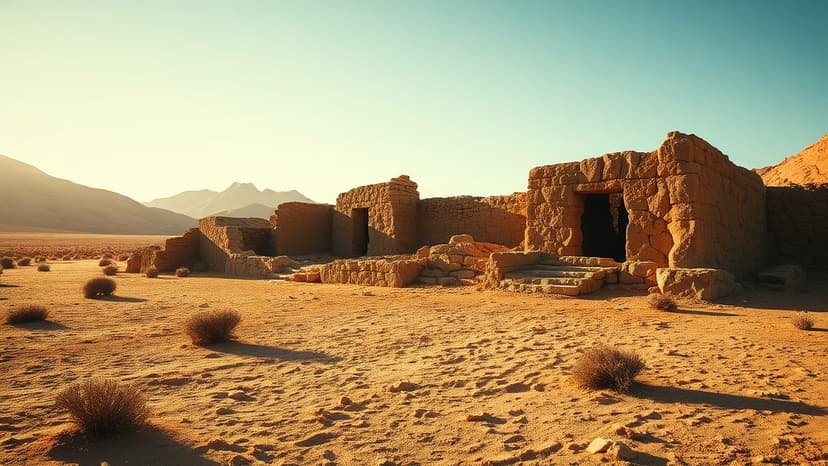
In Peru's dry Supe Valley, an archaeological discovery is reshaping our understanding of early American civilizations. The site, named Peñico and uncovered in 2025, dates back approximately 3,800 years. Initial findings suggest a society that thrived through adaptation and peaceful coexistence, a stark contrast to common assumptions about ancient settlements.
Led by Ruth Shady, archaeologists have unearthed about 18 structures, including temples and residential compounds, indicative of organized community planning. This contrasts with earlier civilizations like Caral, which faced a severe climate shift around 4,000 years ago, leading to prolonged drought. Evidence points to Caral's inhabitants migrating and adapting, with Peñico appearing to be part of this response, situated closer to water sources.
Notably, excavations at Peñico have revealed no fortified walls or weapons thus far, hinting at a community that prioritized cohesion over conflict during a crisis period. Artefacts such as clay figurines and jewellery suggest a rich cultural life persisted. Ongoing excavations at Peñico are expected to reveal more about this unique ancient society.
