Home / Science / Buildings Cool Themselves Using Sky Radiation
Buildings Cool Themselves Using Sky Radiation
4 Sep
Summary
- Radiative cooling material on roof released heat towards the sky.
- Natural airflow and thermal mass helped regulate temperature without fans.
- Test box was 3.9°C below ambient temperature during November experiment.
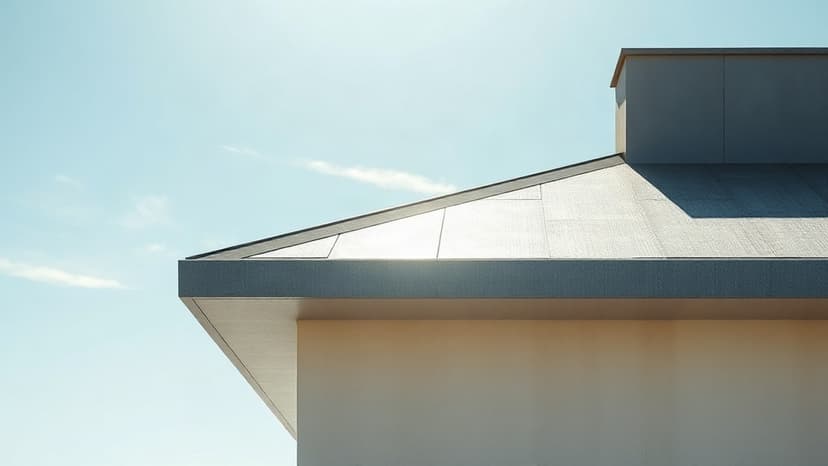
In a recent experiment conducted in California, researchers successfully tested a building's ability to remain cooler than the outside air using only natural ventilation. The study, published in Cell, explored how radiative cooling, thermal mass, and temperature-driven airflow could function as a passive system.
A specially designed test box featured an uninsulated aluminum roof coated with a radiative cooling material. This surface effectively released heat towards the sky. Simultaneously, the underside of the roof absorbed heat from within the box via natural convection, while thermal mass further moderated internal temperatures.
The experiment demonstrated that temperature differences alone could drive air circulation. During November trials, the test box achieved temperatures 3.9°C below the prevailing ambient temperature, whereas a reference box was 5.0°C above it. This passive system maintained nearly seven air changes per hour during the day, even with an internal heat source.
The findings suggest that naturally ventilated buildings can be cooled below ambient temperatures by utilizing roofs that radiate heat towards the sky. The research indicates that adding thermal mass to such roof radiators could also reduce temperature fluctuations, offering a sustainable alternative to conventional cooling methods.


