Home / Science / Oldest Martian Meteorite Reveals Ancient Water Secrets
Oldest Martian Meteorite Reveals Ancient Water Secrets
30 Oct
Summary
- Meteorite found in Mali may be oldest Martian rock yet discovered.
- Rock shows evidence of water interacting with Mars' crust.
- Ancient Mars might have been habitable for microbial life.
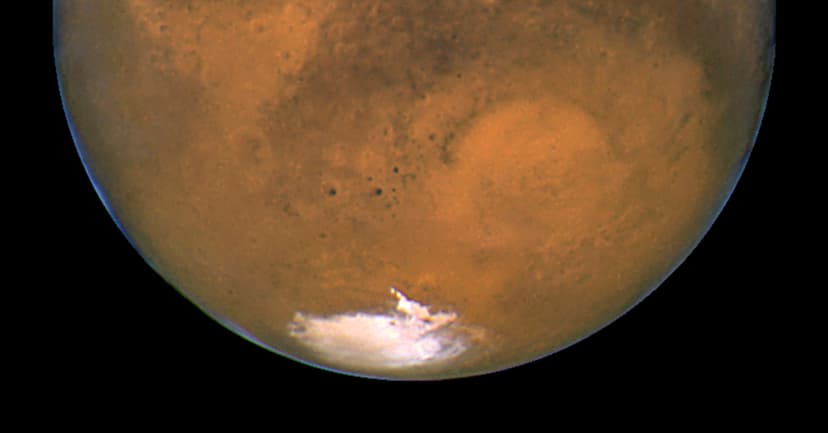
A meteorite discovered in Mali's Sahara desert in 2022, designated Teghaza 001, is providing scientists with an unprecedented glimpse into Mars' ancient past. Dated to at least 4.1 billion years ago, this rock is possibly the oldest Martian meteorite known on Earth. Its mineral composition indicates interactions with liquid water during its formation in the Martian crust, suggesting that early Mars was a warmer and wetter environment than its current state.
This ancient Martian rock offers significant evidence supporting the hypothesis that primordial Mars could have been conducive to microbial life. The presence of water isotopes within Teghaza 001 confirms that water was present and interacting with molten rock deep within the planet's crust over 4.1 billion years ago. While this discovery highlights the potential for habitability, it does not confirm the existence of life on Mars.
The study of Teghaza 001 is crucial for understanding the evolution of early Mars and how it diverged from Earth. Martian meteorites serve as vital samples for laboratory analysis, complementing ongoing robotic exploration efforts. The findings suggest that while early Mars possessed the necessary conditions for life, these environments began to wane significantly within its first billion years, leading to the planet's transformation into the arid world observed today.


