Home / Science / Fossil Footprints Rewrite Nutcracker Man's Story
Fossil Footprints Rewrite Nutcracker Man's Story
28 Jul
Summary
- Nutcracker Man was taller and heavier than previously estimated.
- Fossil footprints suggest P. boisei lived in complex social groups.
- New analysis of Kenyan footprints offers insights into ancient hominins.
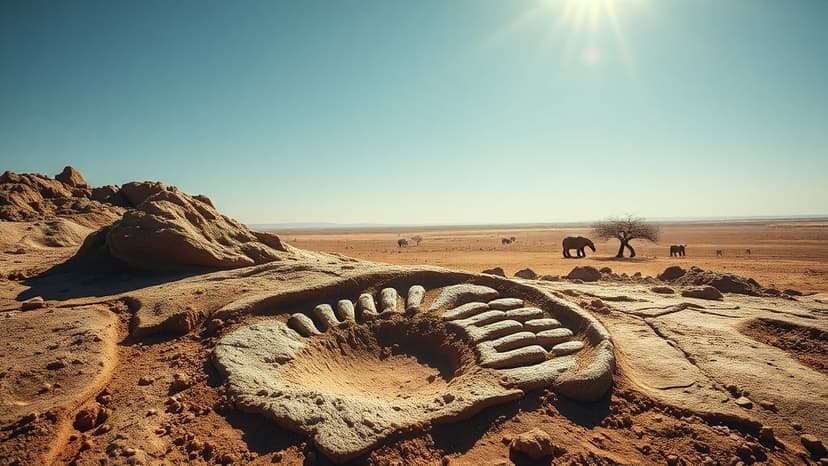
Fresh analysis of fossil footprints in Kenya has revised the longstanding picture of "Nutcracker Man," or Paranthropus boisei. This extinct hominin, once believed to be short and light, is now estimated to have stood up to 6 feet tall and weighed as much as 165 pounds. These updated calculations stem from 21 newly identified footprints found at the Koobi Fora Formation in East Turkana.
The preserved tracks also suggest that eight P. boisei individuals were traveling together as a group, indicating more complex social structures than previously understood. Researchers hypothesize these could have been adult males moving along the lakeshore, possibly for safety. These footprints, dating to approximately 1.4 million years ago, provide a unique snapshot into hominin anatomy, locomotion, and behavior.
P. boisei coexisted with Homo erectus near Lake Turkana, with fossil footprints from both species discovered in the region. While Homo erectus shared more body proportions with modern humans, P. boisei had features closer to tree-dwelling primates. The unique shape of P. boisei footprints, including flatter arches and a more angled big toe compared to modern humans, aids in their identification.
Fossil footprints are invaluable because they offer both anatomical and behavioral information, capturing a moment when these ancient hominins were alive. Unlike isolated bones, these impressions allow for a more relatable connection to our extinct relatives, bringing the prehistoric world into clearer focus and highlighting our shared ancestry on the African landscape.


