
Home / Science / Nose's Hidden Map Unveiled by Scientists
Nose's Hidden Map Unveiled by Scientists
29 Apr
Summary
- Mouse noses show a precise spatial pattern of scent receptors.
- Advanced genetic sequencing and imaging mapped 1,100 receptor types.
- This finding suggests topographic maps are fundamental to olfaction.
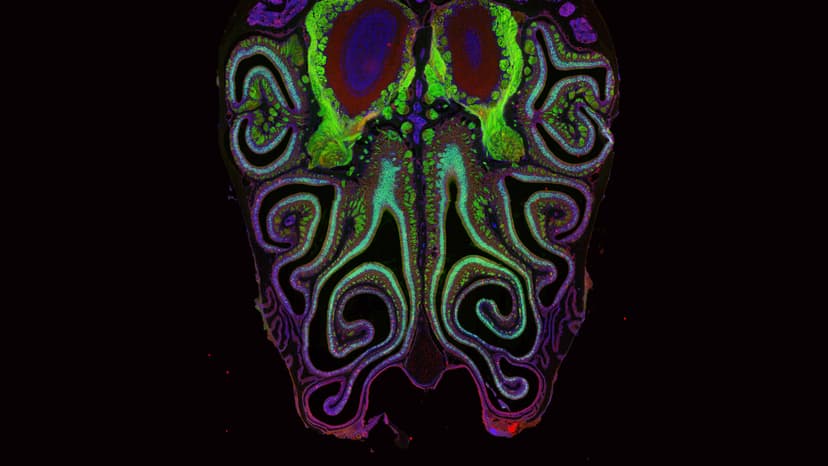
Two new studies have revealed that the odor receptors in a mouse's nose are not randomly arranged but follow a precise spatial pattern. For years, scientists believed the vast array of scent receptors in the nose were haphazardly distributed, unlike other sensory systems like sight and sound. However, employing advanced genetic sequencing and imaging techniques, researchers have now created the first comprehensive, fine-scale maps of these receptors.
These maps show that each of the 1,100 different types of olfactory receptors in the mouse nose occupies a distinct and predictable position, consistent from one mouse to another. This organization suggests that topographic maps, which help the brain process sensory information efficiently, are as fundamental to smell as they are to other senses.
While this discovery has been made in mice, scientists have yet to confirm if a similar map exists in the human nose. The research, published in the journal Cell, not only sheds light on the development of the olfactory system but also raises questions about why these receptors are arranged in such a specific manner. Future research aims to understand the functional implications of this newly discovered scent map.
