Home / Science / Norway's Aurora: A Century of Science Revealed
Norway's Aurora: A Century of Science Revealed
24 Feb
Summary
- Norway is the birthplace of scientific auroral research, starting in 1899.
- A new radar system in Skibotn will probe the upper atmosphere.
- Understanding auroras helps predict space weather impacting communications.
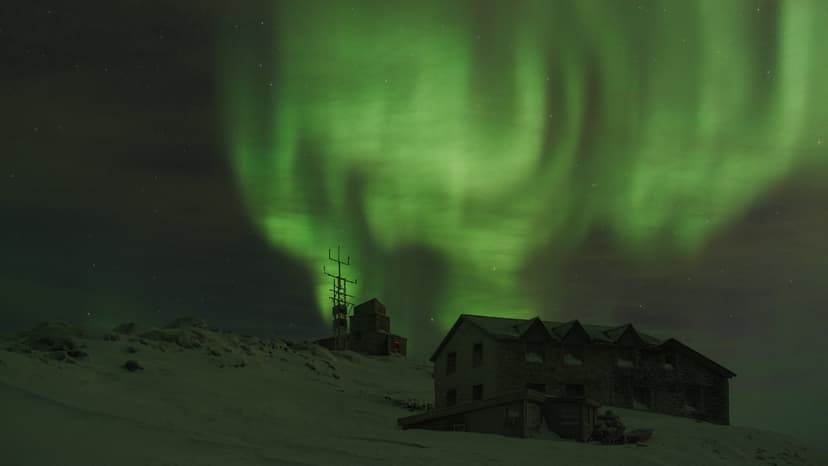
Norway has long been a hub for auroral research, a journey that began with Kristian Birkeland's establishment of the world's first permanent northern lights observatory atop Mount Halde in 1899. Scientists have historically observed, analyzed, and photographed auroras from this region, which is considered the birthplace of auroral science. Early research faced arduous conditions, leading to a relocation of measurements to Tromso in 1926. This summer, a sophisticated new radar system, EISCAT 3D, is expected to commence operations in Skibotn, featuring an array of 10,000 antennas to study Earth's upper atmosphere.
The new EISCAT 3D radar, located along Norway's Northern Lights Route, will transmit radio waves and analyze their scattering by free electrons in the ionosphere. This advanced system will coordinate with similar sites in Finland and Sweden, enabling the creation of three-dimensional images of plasma. These insights are vital for understanding auroras and predicting space weather, which can impact global communications and power grids. The legacy of auroral science in Norway continues, building on decades of data and the foundational work of scientists like Birkeland.