feedzop-word-mark-logo
searchLogin
Feedzop
homeFor YouIndiaIndia
You
bookmarksYour BookmarkshashtagYour Topics
Trending
Terms of UsePrivacy PolicyAboutJobsPartner With Us

© 2026 Advergame Technologies Pvt. Ltd. ("ATPL"). Gamezop ® & Quizzop ® are registered trademarks of ATPL.

Gamezop is a plug-and-play gaming platform that any app or website can integrate to bring casual gaming for its users. Gamezop also operates Quizzop, a quizzing platform, that digital products can add as a trivia section.

Over 5,000 products from more than 70 countries have integrated Gamezop and Quizzop. These include Amazon, Samsung Internet, Snap, Tata Play, AccuWeather, Paytm, Gulf News, and Branch.

Games and trivia increase user engagement significantly within all kinds of apps and websites, besides opening a new stream of advertising revenue. Gamezop and Quizzop take 30 minutes to integrate and can be used for free: both by the products integrating them and end users

Increase ad revenue and engagement on your app / website with games, quizzes, astrology, and cricket content. Visit: business.gamezop.com

Property Code: 5571

Home / Science / Nighttime Power: Scientists Reverse Solar Panel Tech

Nighttime Power: Scientists Reverse Solar Panel Tech

20 Jan

•

Summary

  • Researchers developed a device generating electricity by emitting light.
  • The technology converts infrared radiation into usable electrical power.
  • This innovation could power satellites during dark periods in orbit.
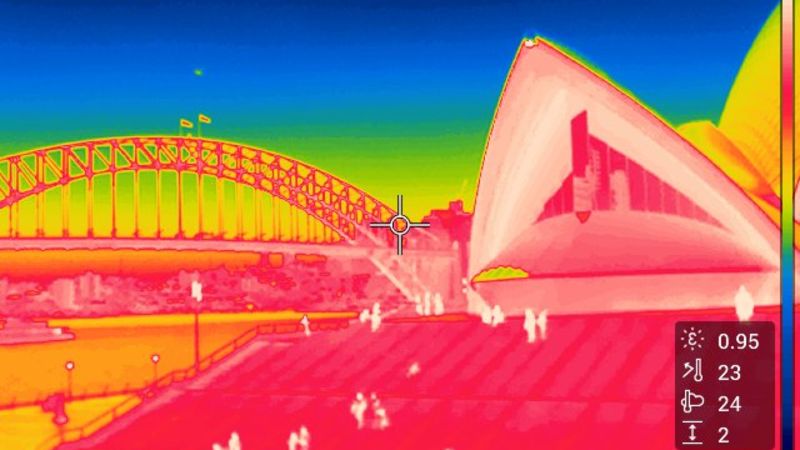
Nighttime Power: Scientists Reverse Solar Panel Tech

Researchers at the University of New South Wales (UNSW) are pioneering a groundbreaking technology that generates electricity after sunset. Their thermoradiative diode converts infrared radiation, the heat emitted by the Earth, into electrical power. This innovative approach functions as a reverse solar panel, absorbing ambient heat and converting it into usable energy.

The team demonstrated electrical power generation from these diodes in 2022, building on work from Harvard and Stanford. While the current output is minimal, comparable to powering a digital watch, the technology's potential is significant. Professor Ned Ekins-Daukes believes its primary application lies in space, powering satellites during their orbital periods without sunlight.

In space, the absence of an atmosphere creates a larger temperature difference, allowing the diodes to operate more efficiently. This could provide auxiliary power to satellites, supplementing traditional solar panels during darkness. NASA scientists are also exploring similar technologies for deep space missions and lunar rovers, potentially replacing heavy radioactive power sources with lighter, more efficient diode systems.

trending

Army vehicle plunges in Doda

trending

Nurses infected with Nipah virus

trending

SIDBI gets ₹5,000 cr boost

trending

FSSAI enforcement has limited impact

trending

IIFL shares plunge after tax

trending

Hang Seng Index rises

trending

Delhi weather: Yellow alert issued

trending

AFCAT 1 admit card released

trending

Gold, silver prices fall

UNSW's team is planning a balloon test flight to trial their diode technology in space. They are also investigating materials that could accelerate commercial availability within five years, potentially within the next five to ten years for deep space applications.

Disclaimer: This story has been auto-aggregated and auto-summarised by a computer program. This story has not been edited or created by the Feedzop team.
It is a device developed by UNSW scientists that generates electricity by emitting light, converting infrared radiation (heat) into electrical power.
It captures heat radiated from the Earth at night and converts this infrared radiation into a small amount of electrical energy.
The technology shows promise for powering satellites in space during dark periods and could be used for deep space missions and lunar rovers.

Read more news on

Scienceside-arrowNASAside-arrowHarvard Universityside-arrow

You may also like

Study: Silfab Spill Could Reach 4 Miles

8 Jan • 44 reads

article image

MIT Prof Shooting: Link to Brown Campus Tragedy?

19 Dec, 2025 • 211 reads

article image

Harvard Email Found 6 Years Late: Musician's Shocking Discovery

18 Dec, 2025 • 212 reads

article image

AI Decodes 3.3 Billion-Year-Old Molecular 'Ghosts' to Reveal Earliest Signs of Life

18 Nov, 2025 • 367 reads

article image

32 Americans Awarded Prestigious Rhodes Scholarships for 2026

16 Nov, 2025 • 321 reads

article image