

Home / Science / New Polymer Stops Battery Fires Cold
New Polymer Stops Battery Fires Cold
9 Apr
Summary
- New polymer electrolyte forms a solid barrier to stop overheating.
- Sodium-ion cells demonstrated complete suppression of thermal runaway.
- Safety improvements do not reduce battery performance or energy density.
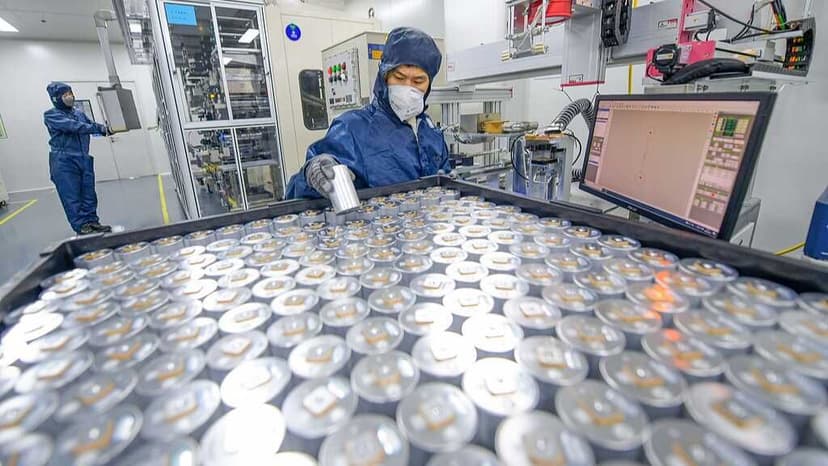
A breakthrough in battery safety has been announced by researchers at the Chinese Academy of Sciences (CAS), who have developed a polymer electrolyte designed to prevent dangerous overheating in sodium-ion batteries. This innovative material acts as an internal firewall, forming a solid barrier when internal temperatures exceed approximately 302°F (150°C).
This transformation effectively halts the chain reaction known as thermal runaway, a critical safety concern for electric vehicles and grid-scale storage. The system, described as a polymerizable non-flammable electrolyte (PNE), creates a dense solid layer that blocks heat transfer between battery components, preventing the spread of heat.
Testing on 3.5Ah sodium-ion cells, a capacity significant for practical applications, showed complete suppression of thermal runaway. Even under nail penetration tests simulating internal short circuits, the batteries produced no smoke, fire, or explosions, remaining stable at temperatures up to 572°F (300°C).
Importantly, these advanced safety features did not negatively impact performance. The batteries maintained an energy density of 211Wh/kg and operated reliably across temperatures from -40°F to 140°F. Voltage stability above 4.3V was also preserved during testing. The researchers noted that the components of this new safety system are already in common industrial use, which could facilitate the scaling up of this technology for commercial manufacturing.

