feedzop-word-mark-logo
searchLogin
Feedzop
homeFor YouIndiaIndia
You
bookmarksYour BookmarkshashtagYour Topics
Trending
Terms of UsePrivacy PolicyAboutJobsPartner With Us

© 2026 Advergame Technologies Pvt. Ltd. ("ATPL"). Gamezop ® & Quizzop ® are registered trademarks of ATPL.

Gamezop is a plug-and-play gaming platform that any app or website can integrate to bring casual gaming for its users. Gamezop also operates Quizzop, a quizzing platform, that digital products can add as a trivia section.

Over 5,000 products from more than 70 countries have integrated Gamezop and Quizzop. These include Amazon, Samsung Internet, Snap, Tata Play, AccuWeather, Paytm, Gulf News, and Branch.

Games and trivia increase user engagement significantly within all kinds of apps and websites, besides opening a new stream of advertising revenue. Gamezop and Quizzop take 30 minutes to integrate and can be used for free: both by the products integrating them and end users

Increase ad revenue and engagement on your app / website with games, quizzes, astrology, and cricket content. Visit: business.gamezop.com

Property Code: 5571

Home / Science / Fat Molecule Could Reverse Brain Flow Issues

Fat Molecule Could Reverse Brain Flow Issues

20 Jan

•

Summary

  • A fat molecule, PIP2, acts as a brake on brain's Piezo1 sensor.
  • Low PIP2 levels cause overactive Piezo1, disrupting brain blood flow.
  • Restoring PIP2 levels largely recovered normal blood flow patterns.
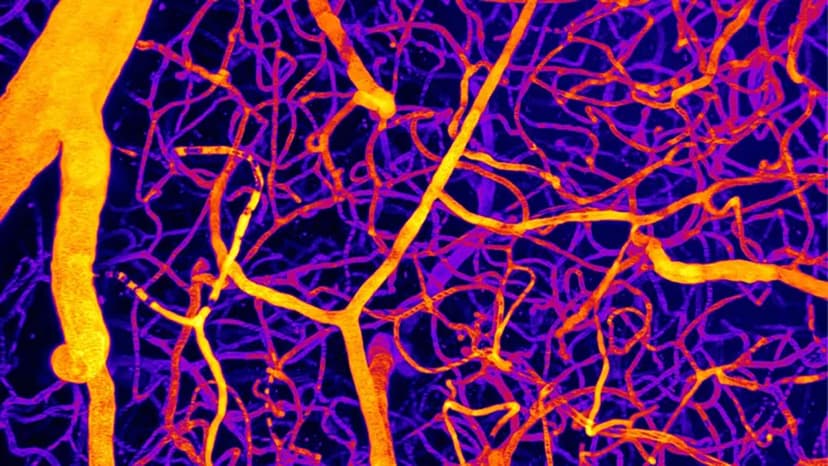
Fat Molecule Could Reverse Brain Flow Issues

Researchers have uncovered a critical mechanism controlling blood flow to the brain, a process thought to be vital in various dementias. The discovery centers on a fat molecule named PIP2, which functions as a regulator for the Piezo1 protein, a pressure sensor within blood vessel cells.

In mouse models exhibiting Alzheimer's-like conditions, scientists observed that PIP2 levels were abnormally low. This imbalance caused the Piezo1 sensor to become overactivated, leading to improper distribution of blood flow throughout the brain. This disruption is a significant factor in conditions like vascular dementia.

Significantly, when the researchers successfully restored PIP2 levels in these mice, they observed a substantial recovery of more normal blood flow patterns. This finding presents a promising new avenue for investigating the underlying causes of dementia and developing potential therapeutic interventions to improve cerebral blood flow.


trending

Gold prices hit all-time high

trending

Gold, silver prices soar

trending

New Zealand faces India in T20Is

trending

KEA revises KCET exam dates

trending

Sinner, Alcaraz dominate tennis

trending

2026 Skoda Kushaq unveiled

trending

Netweb Technologies share price jumps

trending

Citi on PNB: Sell

trending

Hindustan Zinc share analysis

Disclaimer: This story has been auto-aggregated and auto-summarised by a computer program. This story has not been edited or created by the Feedzop team.
Researchers discovered a new mechanism involving a fat molecule that regulates blood flow to the brain, potentially explaining dementia-related issues.
PIP2 acts as a brake on the Piezo1 sensor; low levels cause overactivation and disrupt normal brain blood flow, as seen in Alzheimer's mouse models.
Restoring PIP2 levels in mouse models largely recovered normal blood flow, suggesting it could be a therapeutic target for dementia.

Read more news on

Scienceside-arrow

You may also like

Home Alzheimer's Test: Finger Prick Breakthrough?

1 day ago • 5 reads

article image

Brain Drains Clogged? New MRI Scan Key to Early Alzheimer's Detection

10 Dec, 2025 • 205 reads

article image

Neuroscientist Reveals 3 Ways to Grow Brain Cells

11 Dec, 2025 • 191 reads

article image

Stomach Bug Protein Fights Alzheimer's Plaque

7 Dec, 2025 • 234 reads

article image

Tiny Genetic Flaw Causes 'Baby Alzheimer's'

6 Dec, 2025 • 274 reads

article image