

Home / Science / NASA's Roman Telescope: Unveiling Cosmic Secrets
NASA's Roman Telescope: Unveiling Cosmic Secrets
22 Apr
Summary
- Roman telescope will discover tens of thousands of new planets.
- It will study dark matter and dark energy, making up 95% of the universe.
- The telescope is scheduled for a SpaceX rocket launch in September.
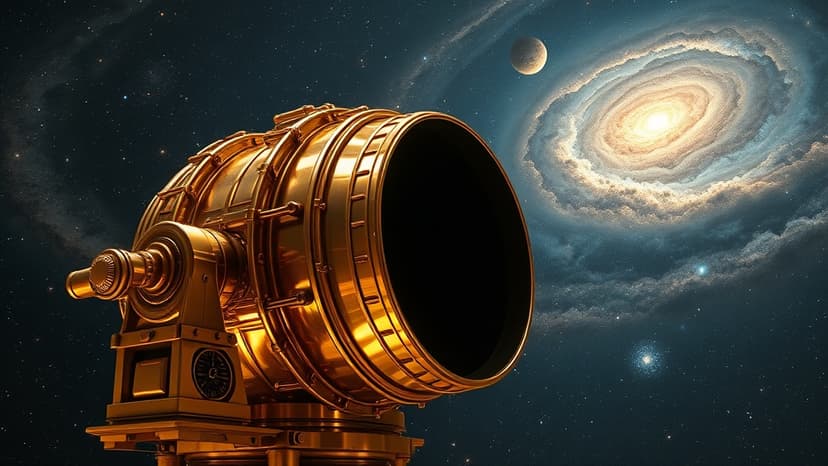
NASA has unveiled the Roman space telescope, a powerful new instrument designed to explore the universe's most profound mysteries. This advanced telescope, named after astronomer Nancy Grace Roman, is slated for launch aboard a SpaceX rocket in September at the earliest. Its mission encompasses discovering tens of thousands of planets outside our solar system, revealing billions of galaxies, and studying dark matter and dark energy.
The Roman telescope boasts a field of view 100 times larger than the Hubble Space Telescope, enabling it to survey immense areas of space. It is anticipated to transmit 11 terabytes of data daily, surpassing Hubble's entire lifetime data output within its first year of operation. This vast dataset will allow scientists to conduct a comprehensive census of cosmic objects and identify areas for further investigation by other observatories like the James Webb Space Telescope.
Beyond exoplanets, Roman will probe the invisible components of the universe: dark matter and dark energy. Dark matter is believed to hold galaxies together, while dark energy drives the universe's accelerated expansion. Utilizing its infrared capabilities, the telescope will look back billions of years, offering insights into how dark matter has structured itself over cosmic time and measuring the rate at which galaxies are moving apart. These observations could fundamentally alter our comprehension of the universe's structure.
