Home / Science / Cold War Jet Hunts Fire Storms
Cold War Jet Hunts Fire Storms
15 Aug
Summary
- Modified U-2 spy plane studies wildfire-generated storms.
- These storms, called pyrocumulonimbus, produce lightning and fire tornadoes.
- NASA's INSPYRE mission aims to improve storm prediction capabilities.
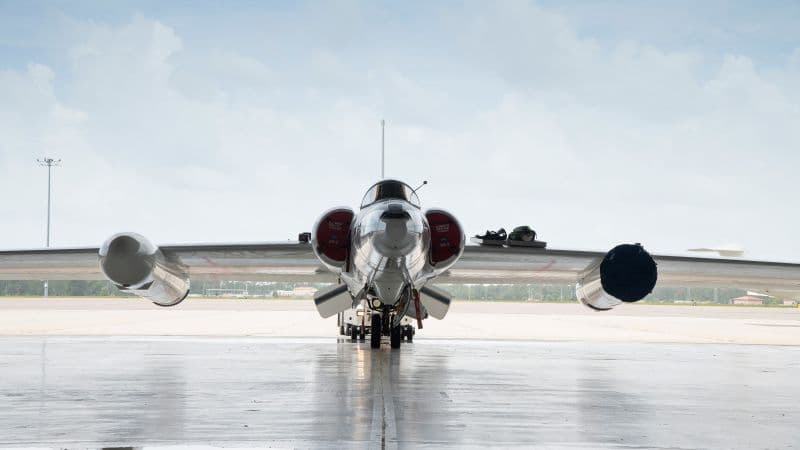
NASA is utilizing a modified U-2 spy plane, originally developed during the Cold War, for a groundbreaking mission to study wildfire-generated storms. This aircraft, referred to as the ER-2, has been outfitted with a flying laboratory of scientific instruments instead of military defenses.
The mission focuses on pyrocumulonimbus storms, immense thunderstorms fueled by wildfire heat. These events can spawn lightning, powerful winds, and in extreme cases, fire tornadoes. Scientists are particularly interested in their erratic behavior and their ability to reach the stratosphere.
Named the INjected Smoke and PYRocumulonimbus Experiment (INSPYRE), the mission aims to understand the conditions that produce these storms. The ER-2's high-altitude capabilities allow it to effectively orbit over wildfires, gathering data on plume size, altitude, air motion, and electrical activity within the storm clouds.
This initiative also involves flying a Gulfstream 5 jet directly inside the storm clouds to collect complementary data. The ultimate goal is to develop better predictive tools for these fire-driven weather phenomena, enhancing safety and preparedness.


