

Home / Science / Smallest Males Win: Midge Mating Study
Smallest Males Win: Midge Mating Study
5 Apr
Summary
- Zoologist studied tiny non-biting midges and their mating habits.
- Smallest midge males had disproportionate success in mating swarms.
- Adaptation to transient environments was key to midge survival.
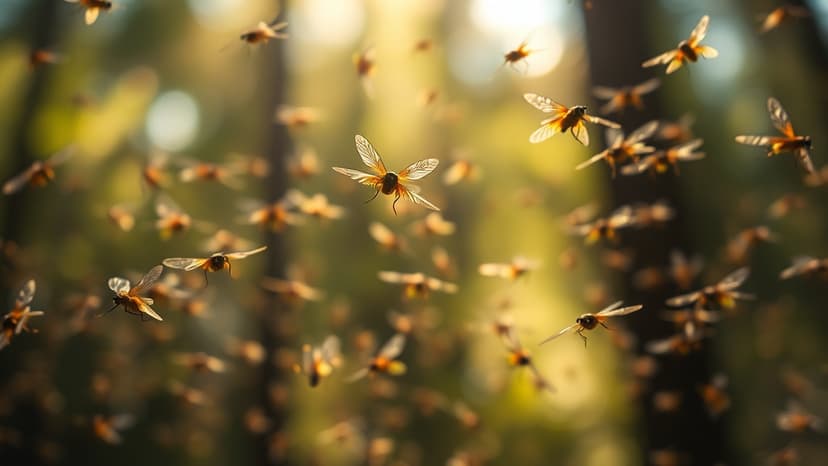
Zoologist Athol McLachlan, who died at age 86, dedicated his career to studying chironomid midges. His groundbreaking work offered elegant insights into how natural selection adapts organisms to transient environments. McLachlan's research began in the 1960s during his doctoral studies on Lake Kariba in Zimbabwe. He was particularly intrigued by midges in shallow rain pools, which offered natural experiments on adaptation to predictable, yet temporary, conditions.
Further studies in the UK revealed a surprising aspect of midge mating swarms. While larger males often dominate in other species, McLachlan demonstrated that the smallest male midges achieved disproportionate mating success. This advantage stemmed from their aerial agility, allowing them to intercept females more effectively in three-dimensional mating arenas. This finding has been integrated into broader sexual selection theory.
McLachlan's research also delved into the concept of balancing selection. He and his student Rachel Neems showed that while small size aided mating, it was disadvantageous during the larval stage, exposing them to predation. Consequently, males of intermediate size proved most successful at passing on their genes, showcasing a neat example of evolutionary trade-offs across an organism's full life cycle.
