feedzop-word-mark-logo
searchLogin
Feedzop
homeFor YouIndiaIndia
You
bookmarksYour BookmarkshashtagYour Topics
Trending
Terms of UsePrivacy PolicyAboutJobsPartner With Us

© 2026 Advergame Technologies Pvt. Ltd. ("ATPL"). Gamezop ® & Quizzop ® are registered trademarks of ATPL.

Gamezop is a plug-and-play gaming platform that any app or website can integrate to bring casual gaming for its users. Gamezop also operates Quizzop, a quizzing platform, that digital products can add as a trivia section.

Over 5,000 products from more than 70 countries have integrated Gamezop and Quizzop. These include Amazon, Samsung Internet, Snap, Tata Play, AccuWeather, Paytm, Gulf News, and Branch.

Games and trivia increase user engagement significantly within all kinds of apps and websites, besides opening a new stream of advertising revenue. Gamezop and Quizzop take 30 minutes to integrate and can be used for free: both by the products integrating them and end users

Increase ad revenue and engagement on your app / website with games, quizzes, astrology, and cricket content. Visit: business.gamezop.com

Property Code: 5571

Home / Science / Mars Time: Clocks Tick Faster on Red Planet

Mars Time: Clocks Tick Faster on Red Planet

31 Dec, 2025

•

Summary

  • Mars clocks tick 477 microseconds faster per day than Earth.
  • Orbital variations cause daily time differences on Mars.
  • Accurate Martian timing is crucial for future space exploration.

Mars Time: Clocks Tick Faster on Red Planet

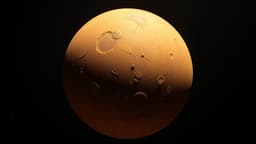
Physicists have precisely calculated the rate at which time passes on Mars, finding that clocks there tick approximately 477 microseconds faster each Martian day than on Earth. This temporal difference, however, is not static. Due to Mars' elongated orbit and gravitational pull from other celestial bodies, the variation can swing by up to 226 microseconds daily throughout a Martian year.

This groundbreaking research is essential for NASA's future Mars exploration endeavors. Accurate timekeeping is fundamental for critical operations such as navigation, communication, and coordinating activities across vast planetary distances. The findings build upon previous work on lunar timekeeping, moving closer to science fiction visions of interplanetary travel.

While a difference of a few microseconds may seem negligible, it has significant implications for advanced technology requiring high timing accuracy. Developing a synchronized framework for interplanetary timekeeping could enable real-time communication networks across the solar system, revolutionizing future space missions and scientific endeavors.


trending

Chelsea beats West Ham 3-2

trending

Liverpool, Newcastle face injury woes

trending

WWE Royal Rumble in Riyadh

trending

Barcelona faces Elche in LaLiga

trending

Goretzka staying at Bayern Munich

trending

ICC T20 World Cup squads

trending

Gold, silver ETFs crashed

trending

Curran, Pandya T20Is stats compared

trending

Suryakumar Yadav T20I record

Disclaimer: This story has been auto-aggregated and auto-summarised by a computer program. This story has not been edited or created by the Feedzop team.
NIST scientists calculated that clocks on Mars tick approximately 477 microseconds faster per day than clocks on Earth.
Accurate timing on Mars is crucial for navigation, communication, and coordination during future exploration missions.
Time on Mars is influenced by its surface gravity, its orbital motion, and the gravitational effects of the Sun, Earth, and Moon.

Read more news on

Scienceside-arrowNASAside-arrow

You may also like

Earth's Mars? Atacama's extreme dryness shocks

17 Jan • 74 reads

article image

NASA Seeks Mars Farmers: $750K Prize for Red Planet Food Plan

13 Jan • 89 reads

article image

NASA Cleanrooms Hide Secret Life: 26 New Bacteria Found

1 Jan • 163 reads

article image

Mars Oasis: Red Planet Once a Tropical Paradise?

8 Dec, 2025 • 242 reads

article image

NASA Drones Brave Death Valley Heat for Mars Tech

4 Dec, 2025 • 244 reads

article image