Home / Science / Ancient Texts Reveal Maharashtra's True Savanna Past
Ancient Texts Reveal Maharashtra's True Savanna Past
8 Feb
Summary
- Marathi literature from the 13th to 20th centuries analyzed for ecological data.
- Research confirms ancient savanna ecosystems, not degraded forests.
- Landscape consistency over 750 years surprised ecologists.
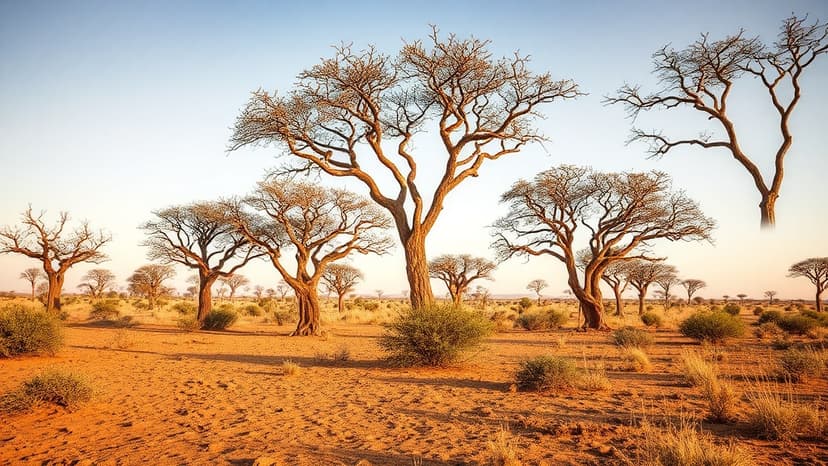
Ecologists are now using traditional Marathi literature to reveal the ancient ecological history of western Maharashtra, challenging popular misconceptions. Researchers Ashish Nerlekar and Digvijay Patil analyzed nearly 750 years of Marathi texts, dating from the 13th to the 20th century. Their findings, published in People and Nature, suggest that the region's historical landscape was characterized by ancient tropical savannas rather than dense forests.
The study meticulously filtered texts, including sant biographies and folklore, focusing on those firmly rooted in specific locations within western Maharashtra. This rigorous approach excluded material that might reflect imagination or abstraction, prioritizing spatially explicit descriptions of landscapes and vegetation. Such texts confirmed the presence of open environments suited for pastoralism and hunting communities.
One of the most striking discoveries was the remarkable continuity of the landscape over the 750-year period. The dominant tree species described in these historical accounts are still present in similar proportions today. This consistency challenges the notion that the current savanna-like conditions are a result of recent degradation, instead pointing to their deep historical roots.
This innovative research utilizes culturally resonant evidence to support scientific understanding, potentially aiding policymakers and the public in appreciating the long-standing ecological heritage of regions like western Maharashtra. The study emphasizes that landscapes, such as grasslands, are ancient ecosystems and not necessarily signs of environmental damage.