Home / Science / New Simulation Maps Early Universe's Secrets
New Simulation Maps Early Universe's Secrets
11 Nov
Summary
- Lumina simulation models the first stars and black holes driving reionization.
- It covers 100 times more space than previous simulations.
- The model required 15,000 GPUs on the Frontier supercomputer.
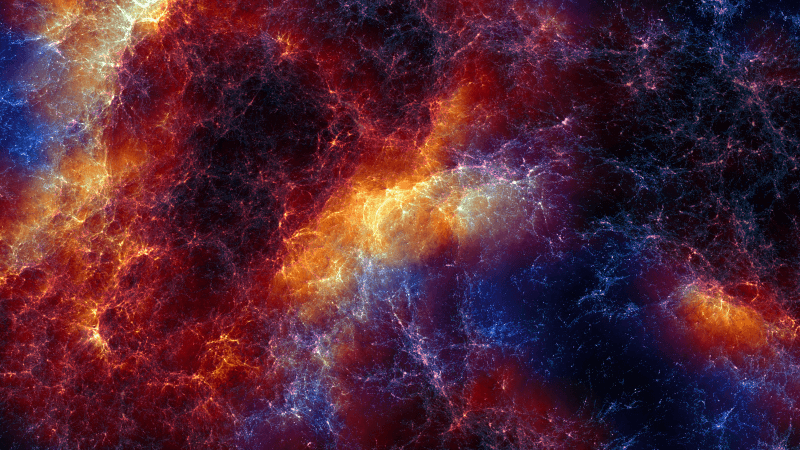
Scientists have developed Lumina, a highly detailed supercomputer simulation of the early universe. This model recreates the pivotal reionization phase, when the first stars and black holes stripped electrons from hydrogen atoms. The simulation spans a vast region approximately 1.5 billion light-years across, significantly larger than previous efforts.
Constructing Lumina required nearly three years and substantial computing power, utilizing over 15,000 graphics processing units on the Frontier supercomputer. Researchers can now compare Lumina's outputs with observations from telescopes like the James Webb Space Telescope to refine theories about cosmic evolution.
Lumina uniquely models the combined effects of hydrogen and helium transformations in the early cosmos. Its immense scale allows for the study of regional variations in cosmic evolution and the distinct movements of ordinary and dark matter, offering new insights into the universe's formative period.


