Home / Science / Bacteria Survive Asteroid Impacts, Spreading Life?
Bacteria Survive Asteroid Impacts, Spreading Life?
27 Feb
Summary
- Microbes can survive immense asteroid impact pressures.
- Life might be transported between planets on rocks.
- Hardy bacteria could potentially seed life on other worlds.
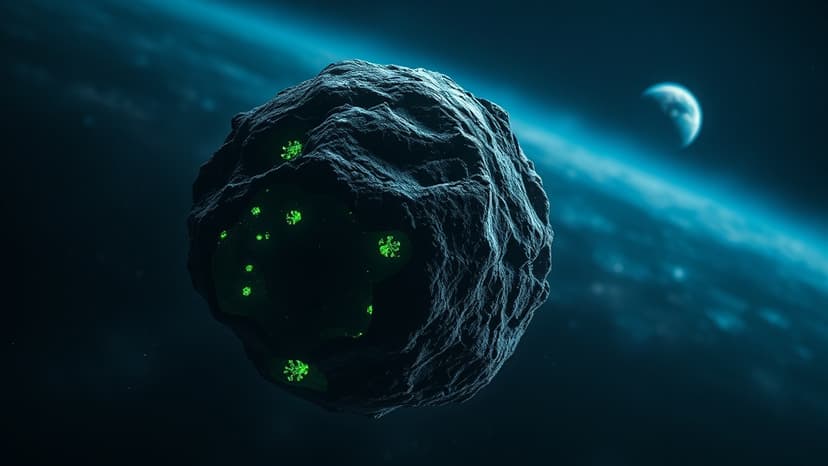
Scientists have discovered that certain resilient bacteria can survive the extreme conditions of an asteroid impact, suggesting that life might travel between planets on ejected rocks. This finding lends significant support to the lithopanspermia hypothesis, which posits that microbial life can be transported across space.
Researchers from Johns Hopkins University focused on Deinococcus radiodurans, a bacterium known for its ability to withstand harsh environments similar to those on Mars. When subjected to pressures up to 2.4 gigapascals—far exceeding those at the deepest ocean trench—a substantial portion of these bacteria survived, demonstrating remarkable hardiness.
This survival rate implies that life could indeed be catapulted from one planet to another. The research indicates that if life ever existed on Mars, it could have potentially seeded Earth. Conversely, Earth life might have traveled to Mars in the planet's past. This opens new avenues for considering the origins and distribution of life within the solar system and beyond.