Home / Science / Laos' Ancient Jars: Crypts of the Past Revealed
Laos' Ancient Jars: Crypts of the Past Revealed
1 Jun
Summary
- Stone urns in Laos have been identified as communal burial sites.
- Excavation revealed a multigenerational crypt with 37 individuals' remains.
- Artifacts suggest trade routes connecting Laos to distant regions.
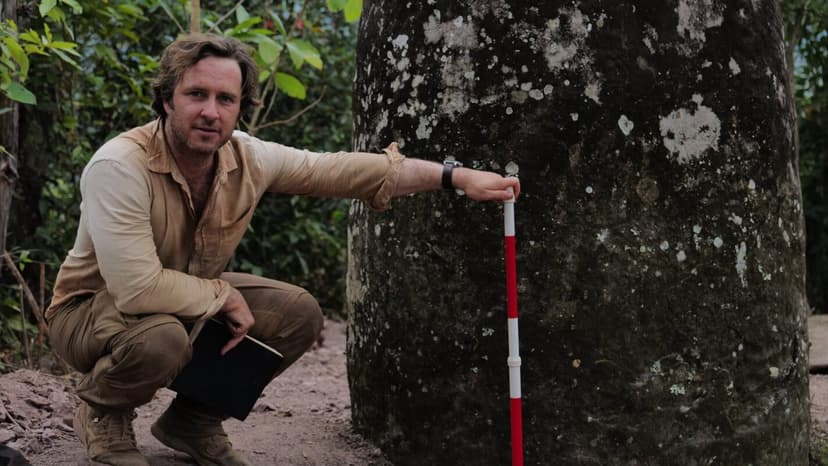
For nearly a century, thousands of massive stone urns in northern Laos, known as the Plain of Jars, have remained an archaeological enigma. Local legends suggested they were for brewing rice wine, but scientists suspected a funerary purpose.
A recent study published in Antiquity provides compelling evidence for this theory. Excavations of one large jar, named Jar 1, revealed it to be a multigenerational crypt. Inside, archaeologists found the jumbled remains of at least 37 individuals, meticulously arranged.
The remains, ranging from infants to adults, suggest a practice of secondary burial. This ritual involved allowing bodies to decompose elsewhere before interring the bones collectively in these stone vessels. This ancient communal ossuary dates between the ninth and 12th centuries.
During the excavation, researchers also uncovered a variety of artifacts, including iron tools, earthenware, and glass beads. Chemical analysis indicated these items originated from distant regions like Mesopotamia and South India, proving the Plain of Jars was a hub of ancient global commerce.
While the purpose of Jar 1 has been clarified, many questions remain about the civilization that created these urns, their way of life, and the reasons for their demise. The scattered placement and varying sizes of the jars also pose further research questions about their social and ritual significance.


