feedzop-word-mark-logo
searchLogin
Feedzop
homeFor YouIndiaIndia
You
bookmarksYour BookmarkshashtagYour Topics
Trending
Terms of UsePrivacy PolicyAboutJobsPartner With Us

© 2026 Advergame Technologies Pvt. Ltd. ("ATPL"). Gamezop ® & Quizzop ® are registered trademarks of ATPL.

Gamezop is a plug-and-play gaming platform that any app or website can integrate to bring casual gaming for its users. Gamezop also operates Quizzop, a quizzing platform, that digital products can add as a trivia section.

Over 5,000 products from more than 70 countries have integrated Gamezop and Quizzop. These include Amazon, Samsung Internet, Snap, Tata Play, AccuWeather, Paytm, Gulf News, and Branch.

Games and trivia increase user engagement significantly within all kinds of apps and websites, besides opening a new stream of advertising revenue. Gamezop and Quizzop take 30 minutes to integrate and can be used for free: both by the products integrating them and end users

Increase ad revenue and engagement on your app / website with games, quizzes, astrology, and cricket content. Visit: business.gamezop.com

Property Code: 5571

Home / Science / Jellyfish Sleep: DNA Repair Key to Ancient Life

Jellyfish Sleep: DNA Repair Key to Ancient Life

27 Jan

•

Summary

  • Jellyfish and anemones exhibit sleep-like behavior, repairing DNA.
  • Sleep in simple invertebrates suggests its ancient origin predates brains.
  • DNA repair during rest is a fundamental function of sleep.
Jellyfish Sleep: DNA Repair Key to Ancient Life

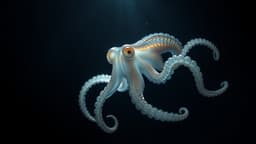
A recent study published in Nature Communications has uncovered that simple invertebrates, such as jellyfish and sea anemones, enter sleep-like states to perform essential cellular repair. These creatures, belonging to a lineage over 500 million years old, show a significant reduction in neural activity during rest periods, during which damage to their DNA accumulates during wakefulness is repaired. This discovery pushes back the evolutionary origins of sleep to before the divergence of major animal groups, suggesting that sleep's fundamental purpose is cellular maintenance.

Researchers observed that nerve cells in jellyfish and anemones experienced increased DNA breaks after periods of activity. During their respective rest phases, these breaks were mended, mirroring processes previously observed only in vertebrates. The study also indicated that melatonin, a hormone associated with sleep in animals with brains, influences these brainless creatures to rest, suggesting an even earlier evolution of sleep's regulatory mechanisms. This research strengthens the hypothesis that sleep began as a vital cellular defense strategy.

trending

Padma Awards: Unsung heroes honoured

trending

Mumbai Metro Line 11

trending

Border 2 box office success

trending

Australian Open Heat Suspends Play

trending

MPESB Police Answer Key 2026

trending

Arne Slot on Mo Salah

trending

BBL 2026 Qualifier prediction

trending

Man wins £79,000 Range Rover

trending

Samsung Galaxy S26 Ultra

The implications of these findings are significant, potentially resolving long-standing debates about sleep's purpose. While more complex functions like memory consolidation may have been added later, the core role of sleep appears to be safeguarding DNA integrity in neurons. This nightly repair window may have been crucial for the survival of ancient organisms, preventing mutations that could lead to loss of function. Future research aims to confirm these findings across various marine environments and species.

Disclaimer: This story has been auto-aggregated and auto-summarised by a computer program. This story has not been edited or created by the Feedzop team.
Jellyfish and sea anemones exhibit sleep-like states where they reduce their activity, allowing their nerve cells to repair DNA damage that accumulates during wakefulness.
The research suggests that the fundamental purpose of sleep in ancient organisms, including jellyfish and anemones, is to repair DNA damage in their nerve cells.
New findings suggest that sleep, for the purpose of DNA repair, likely evolved over 600 million years ago, before the split of major animal lineages and the development of brains.

Read more news on

Scienceside-arrow

You may also like

Ocean Acidification: A New Danger for Sharks

16 Jan • 58 reads

article image

Extraordinary Species Face Extinction Crisis

7 Jan • 144 reads

article image

Invasive Fish Invade Mediterranean, Threatening Cyprus Fisheries

27 Dec, 2025 • 174 reads

article image

Kent Coastline Sees Mass Starfish Die-Off

26 Dec, 2025 • 156 reads

article image

Scientists Brave Twilight Zone for Ocean Secrets

20 Dec, 2025 • 205 reads

article image