feedzop-word-mark-logo
searchLogin
Feedzop
homeFor YouIndiaIndia
You
bookmarksYour BookmarkshashtagYour Topics
Trending
trending

Cyber gang scams elderly man

trending

UPSC CGPDTM registration closing

trending

Tata Harrier petrol launched

trending

MCD to repair Delhi roads

trending

Silver prices reach all-time high

trending

Gold price hits all-time high

trending

iOS 26.2 security update released

trending

Gujarat Kidney IPO opens today

trending

NBEMS NEET SS Admit Card

Terms of UsePrivacy PolicyAboutJobsPartner With Us

© 2025 Advergame Technologies Pvt. Ltd. ("ATPL"). Gamezop ® & Quizzop ® are registered trademarks of ATPL.

Gamezop is a plug-and-play gaming platform that any app or website can integrate to bring casual gaming for its users. Gamezop also operates Quizzop, a quizzing platform, that digital products can add as a trivia section.

Over 5,000 products from more than 70 countries have integrated Gamezop and Quizzop. These include Amazon, Samsung Internet, Snap, Tata Play, AccuWeather, Paytm, Gulf News, and Branch.

Games and trivia increase user engagement significantly within all kinds of apps and websites, besides opening a new stream of advertising revenue. Gamezop and Quizzop take 30 minutes to integrate and can be used for free: both by the products integrating them and end users

Increase ad revenue and engagement on your app / website with games, quizzes, astrology, and cricket content. Visit: business.gamezop.com

Property Code: 5571

Home / Science / ISS sees 16 sunrises daily: Earth's longest night a blur

ISS sees 16 sunrises daily: Earth's longest night a blur

22 Dec

•

Summary

  • ISS orbits Earth 16 times daily, each orbit lasting 90 minutes.
  • Night on the ISS lasts approximately 40 minutes per orbit.
  • Winter solstice marked the longest night in the Northern Hemisphere.
ISS sees 16 sunrises daily: Earth's longest night a blur

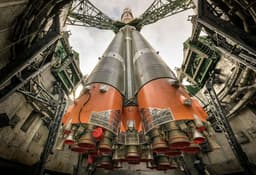
Cosmonaut Sergey Kud-Sverchkov shared breathtaking footage of Earth from the International Space Station (ISS) during the Northern Hemisphere's longest night on December 21st. He explained that from orbit, the experience of 'night' is drastically different, lasting only about 40 minutes. The ISS completes 16 orbits of Earth every 24 hours, with each orbit taking approximately 90 minutes.

This rapid cycling means that light and dark alternate roughly every hour and a half. Kud-Sverchkov noted the footage captured diverse sights, from the city lights of Southeast Asia and China to the aurora over Siberia. This orbital perspective contrasts sharply with the experience on Earth.

On December 21st, Moscow experienced 17 hours of night, the longest of the year. Meanwhile, the shortest daylight in Russia was just 18 minutes in Polyarnye Zori, contrasting with Derbent's longest day of nine hours and seven minutes. The ISS's continuous orbits offer a unique vantage point on these terrestrial cycles.

Disclaimer: This story has been auto-aggregated and auto-summarised by a computer program. This story has not been edited or created by the Feedzop team.
A day on the ISS is marked by 16 orbits around Earth, with each orbit experiencing roughly 40 minutes of night and 80 minutes of day.
Sergey Kud-Sverchkov shared footage of Earth, including city lights in Asia, the aurora over Siberia, and the sunrise over the Primorsky Region.
The winter solstice on December 21st marked the longest night in the Northern Hemisphere.

Read more news on

Scienceside-arrow

You may also like

Soyuz Capsule Plunges Through Atmosphere

9 Dec • 68 reads

article image

ISS Command Changes Hands in Orbital Handover

7 Dec • 70 reads

article image

Cosmic Welcome: ISS Crew Bakes Cake for New Arrivals

28 Nov • 113 reads

article image

Russia Charts Independent Space Path with New Orbital Station

26 Nov • 138 reads

article image

ISS Orbit Boosted for Spacecraft Maneuvers

19 Nov • 159 reads

article image