Home / Science / Tiny Plant Fragments Spark Widespread Waterway Chaos
Tiny Plant Fragments Spark Widespread Waterway Chaos
27 Aug
Summary
- Introduced in 1890 from South America via the aquarium trade.
- Spreads rapidly from small stem fragments, not seeds.
- Forms dense mats, obstructing navigation and harming native plants.
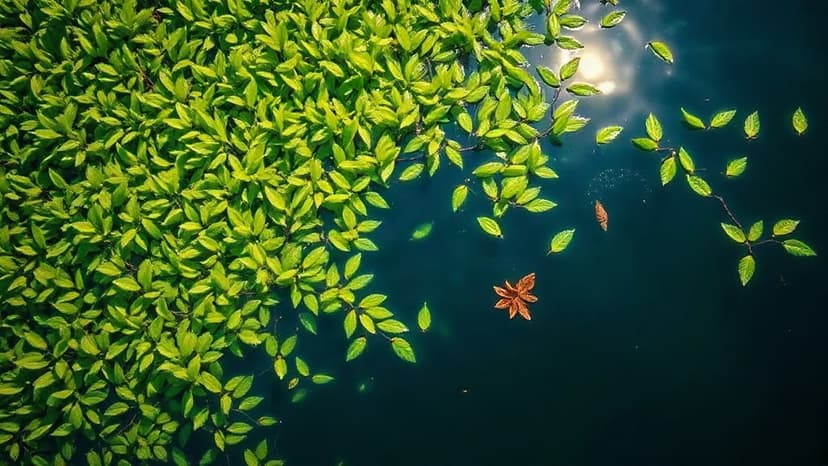
Parrot's feather, an aquatic plant originating from South America, was first introduced to the United States around 1890. Initially valued for its ornamental appearance in aquariums and water gardens, it soon escaped cultivation. Its primary mode of spread is not through seeds but via small fragments of its stems.
These fragments can easily root and grow into new plants, allowing parrot's feather to establish populations in various freshwater habitats like ponds, canals, and lakes across at least 26 states. The plant thrives in shallow, slow-moving waters, forming dense mats that can cover large surface areas.
The invasive nature of parrot's feather presents significant challenges. Its dense growth obstructs boats, impedes fishing and swimming, and clogs drainage channels, potentially contributing to flooding. Furthermore, it aggressively competes with native aquatic plants for essential sunlight, space, and nutrients.
Managing parrot's feather is difficult because mechanical removal can inadvertently create more fragments, perpetuating its spread. These fragments can be transported by boats, fishing gear, or water currents. As a result, efforts are focused on preventing new introductions and limiting the movement of plant pieces between waterways.


