Home / Science / Harvard Scientist: Interstellar 'Trash' Abounds
Harvard Scientist: Interstellar 'Trash' Abounds
11 Feb
Summary
- Earth's orbit may contain 35 million meter-scale interstellar objects.
- Interstellar meteors collide with Earth roughly every three years.
- Studying these objects could reveal material movement between star systems.
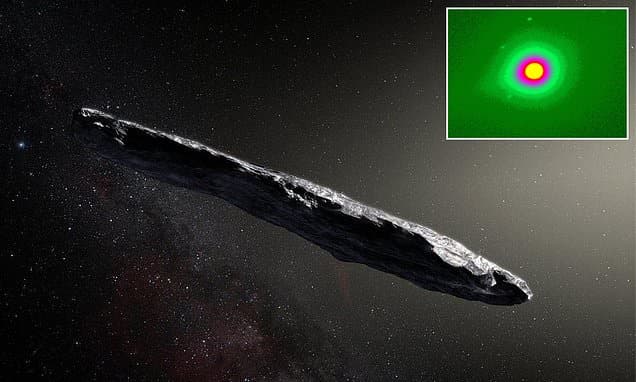
New calculations by a Harvard scientist suggest the Solar System hosts a vast population of interstellar objects, far exceeding previous estimates. Approximately 35 million meter-scale objects, such as rocks or ice from other star systems, are thought to be embedded within Earth's orbit.
This conclusion is based on the detection of two interstellar meteor candidates in 2022 and 2025, which traveled fast enough to exceed the Solar System's escape velocity. Scientists estimate that such meteors impact Earth roughly every three years, pointing to a dense presence of similar objects around the Sun.
Each of these meter-scale objects could carry substantial mass, totaling billions of tons within Earth's orbit. While larger visitors like 'Oumuamua and comet Borisov are rarer, their significant mass means their collective contribution is comparable, hinting that smaller objects might be fragments of larger bodies.
Studying this influx of interstellar material could provide crucial insights into how matter disperses between star systems. Enhanced observational capabilities, including next-generation telescopes, could allow scientists to better analyze their properties, origins, and trajectories.
Furthermore, the potential recovery of material from detected meteors could offer clues about their interstellar journey and origins through radioactive dating. This growing body of research suggests that interstellar visitors are common, not rare, and that Earth constantly traverses material from other stars, presenting both scientific opportunities and the need for vigilance.