feedzop-word-mark-logo
searchLogin
Feedzop
homeFor YouIndiaIndia
You
bookmarksYour BookmarkshashtagYour Topics
Trending
Terms of UsePrivacy PolicyAboutJobsPartner With Us

© 2026 Advergame Technologies Pvt. Ltd. ("ATPL"). Gamezop ® & Quizzop ® are registered trademarks of ATPL.

Gamezop is a plug-and-play gaming platform that any app or website can integrate to bring casual gaming for its users. Gamezop also operates Quizzop, a quizzing platform, that digital products can add as a trivia section.

Over 5,000 products from more than 70 countries have integrated Gamezop and Quizzop. These include Amazon, Samsung Internet, Snap, Tata Play, AccuWeather, Paytm, Gulf News, and Branch.

Games and trivia increase user engagement significantly within all kinds of apps and websites, besides opening a new stream of advertising revenue. Gamezop and Quizzop take 30 minutes to integrate and can be used for free: both by the products integrating them and end users

Increase ad revenue and engagement on your app / website with games, quizzes, astrology, and cricket content. Visit: business.gamezop.com

Property Code: 5571

Home / Science / 2-Month-Olds Show Surprising Brain Skills

2-Month-Olds Show Surprising Brain Skills

3 Feb

•

Summary

  • Infants as young as two months can group complex visual categories.
  • fMRI scans provided precise visual function data in young babies.
  • The study made infants comfortable, comparing it to 'IMAX for babies'.
2-Month-Olds Show Surprising Brain Skills

Scientists have discovered that babies as young as two months old can group together visual categories, a capability more complex than previously understood. This finding emerged from a study utilizing functional magnetic resonance imaging (fMRI) on 130 two-month-old infants.

The fMRI technique allowed researchers to precisely examine visual function by recording brain activity as babies viewed various images, such as animals and trees. This method offered greater detail compared to older studies that relied on observing how long an infant looked at an object.

When the same infants were scanned again at nine months old, their brains showed an even stronger ability to distinguish between living and inanimate objects. Researchers are hopeful that such brain imaging studies could eventually connect to long-term cognitive outcomes.

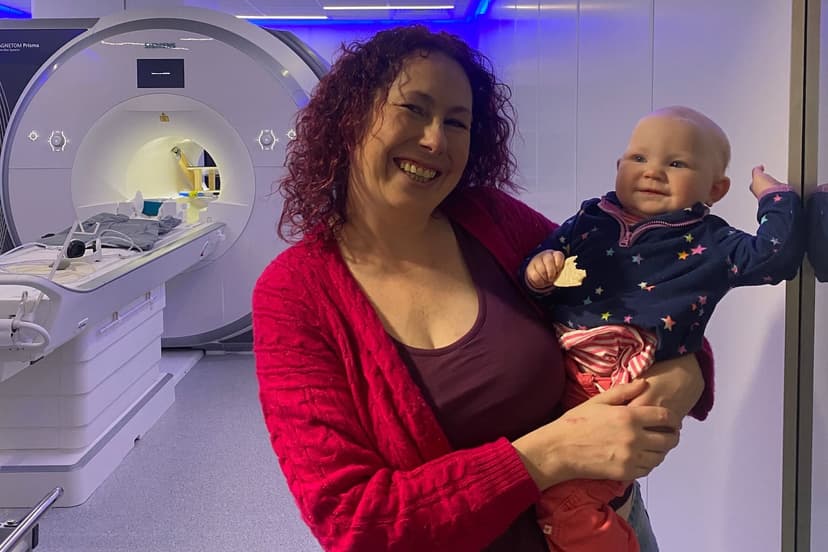
The study's lead, who conducted the work at Trinity College Dublin, emphasized making the fMRI experience comfortable for infants. They reclined on bean bags inside the scanner, viewing large images, an experience described as 'IMAX for babies'.

Disclaimer: This story has been auto-aggregated and auto-summarised by a computer program. This story has not been edited or created by the Feedzop team.
The study found that infants as young as two months old can group visual categories.
Researchers used functional magnetic resonance imaging (fMRI) to examine visual function by recording brain activity as babies viewed images.
The infants reclined on bean bags inside the scanner, viewing large images, an experience described as 'IMAX for babies'.

Read more news on

Scienceside-arrow
trending

Chelsea beats West Ham 3-2

trending

Liverpool, Newcastle face injury woes

trending

WWE Royal Rumble in Riyadh

trending

Barcelona faces Elche in LaLiga

trending

Goretzka staying at Bayern Munich

trending

ICC T20 World Cup squads

trending

Gold, silver ETFs crashed

trending

Curran, Pandya T20Is stats compared

trending

Suryakumar Yadav T20I record

You may also like

Addenbrooke's Neuroscience Unit Under Urgent Review

31 Jan • 13 reads

article image

New CT Scan Agent Promises Clearer Bowel Imaging

25 Jan • 29 reads

article image

Sleepless Brain Cleans Itself While Awake

21 Jan • 4 reads

Neuralink Breakthrough: British Man Thinks, Computer Obeys

2 Jan • 163 reads

article image

AI Headset Predicts Seizures Minutes Before They Hit

3 Jan • 146 reads

article image