Home / Science / Race against time: Preserving world's oldest cave art
Race against time: Preserving world's oldest cave art
19 Nov
Summary
- Climate change accelerates salt crystal formation, damaging ancient cave art.
- Indonesia's caves hold world's oldest known rock art, predating European sites.
- New laser dating methods reveal art's age, but preservation is urgent.
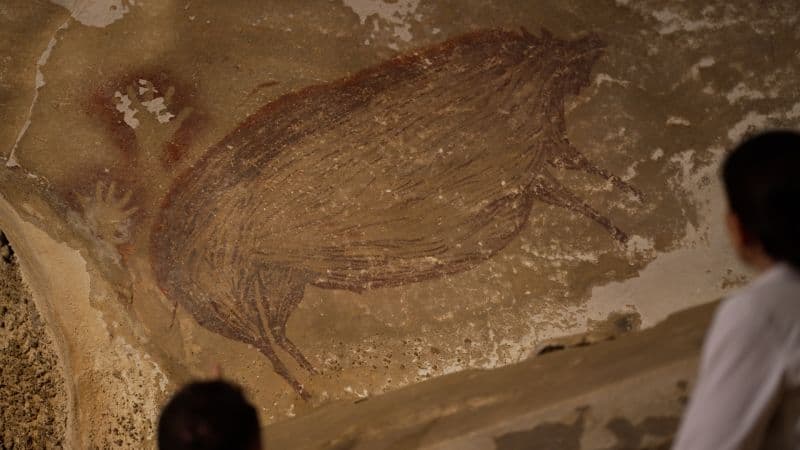
Ancient rock art in Indonesia, predating famous European sites, faces an existential threat from climate change. Accelerated haloclasty, driven by rising temperatures and changing humidity, causes salt crystals to form and damage the porous limestone bearing these prehistoric masterpieces. Archaeologists are urgently working to document these invaluable cultural artifacts.
Sulawesi, Indonesia, hosts over 500 sites with remarkable art, including a narrative scene at least 51,200 years old and a pig painting at least 45,500 years old. A recent breakthrough in dating, using lasers to analyze the oldest mineral layers, revealed a hand stencil on Muna Island to be at least 67,800 years old, making it the world's oldest known rock art.
This ancient art provides crucial insights into early human migration from Southeast Asia to Australia. However, the tropical climate, monsoon patterns, and human development near cave sites exacerbate the deterioration. Fragments of rock art have been observed disappearing within months, highlighting the rapid timescale of the damage.
Conservation efforts require systematic monitoring of cave microclimates and broader climate action. While local interventions are being planned, including safeguarding efforts for the Muna Island cave, the overarching challenge of global climate change persists. Thorough recording through traditional and 3D photography is essential to preserve this heritage for future generations.


