Home / Science / Antarctic Ice Detects Universe's Most Energetic Secrets
Antarctic Ice Detects Universe's Most Energetic Secrets
8 Oct
Summary
- IceCube observatory detected high-energy neutrinos, solving a 114-year cosmic ray mystery.
- Francis Halzen awarded Nobel Physics Prize for leading IceCube's development.
- Neutrino astronomy opens a new window on the cosmos, revealing hidden celestial sources.
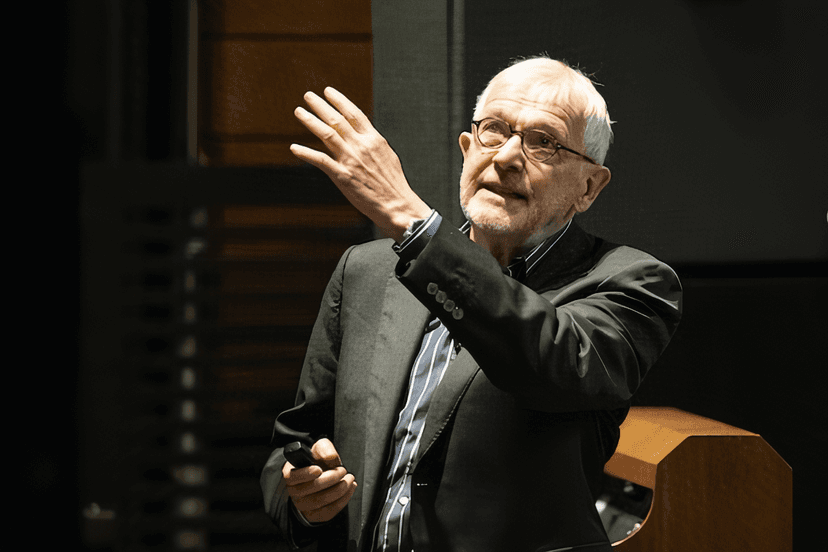
The 2026 Nobel Prize in Physics has been awarded to Francis Halzen for his instrumental role in developing the IceCube Neutrino Observatory. This unique telescope, built within a cubic kilometer of Antarctic glacier, has successfully detected high-energy neutrinos, resolving a puzzle that has stumped physicists for 114 years: the origin of highly energetic cosmic rays.
For over a century, scientists have detected cosmic rays but could not pinpoint their sources due to magnetic deflection. Neutrinos, however, travel in straight lines and are nearly undetectable, making them ideal messengers. IceCube's detection of neutrinos from powerful cosmic accelerators, like blazars and active galaxies, has provided the first concrete answers.
The construction of IceCube involved drilling 86 deep holes in the South Pole ice, installing optical modules to detect Cherenkov radiation produced by neutrino interactions. This monumental engineering feat, funded primarily by the U.S. National Science Foundation, cost $279 million.
In 2017, IceCube identified TXS 0506+056, a blazar four billion light-years away, as a confirmed source of high-energy neutrinos. Subsequent discoveries include evidence of neutrino emission from Messier 77 and the creation of the first Milky Way neutrino map in 2023.
Plans for IceCube-Gen2 are underway to expand the observatory eightfold, aiming to move neutrino astronomy into a phase of systematic source mapping. Halzen's vision and persistence have opened a new frontier in understanding the cosmos.


