Home / Science / Ice Age Mastodon Tooth Found in California Creek
Ice Age Mastodon Tooth Found in California Creek
19 Sep
Summary
- A scientist found an ancient Pacific mastodon tooth in a California creek.
- The tooth is estimated to be between 50,000 and 100,000 years old.
- Researchers plan to carbon date the tooth and create a 3D replica.
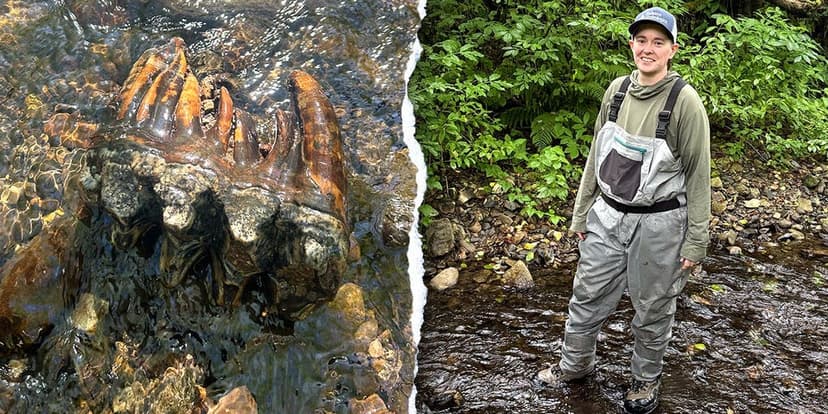
A significant paleontological discovery was made recently when a scientist surveying a California creek unearthed a tooth belonging to an ancient Pacific mastodon. The find occurred in a Midpeninsula Regional Open Space District preserve in San Mateo County. This Ice Age giant went extinct approximately 11,700 years ago, near the end of the last glacial period.
Brigid Lynch, a geomorphologist, made the discovery while assessing habitat improvements for the threatened California red-legged frog. Initially mistaking the molar for an oddly shaped rock, she soon realized its extraordinary nature. Wayne Thompson, CEO of Pacific Paleontology, assessed the tooth and stated it is in "immaculate condition," likely dating between 50,000 and 100,000 years old, a detail he emphasized as being older than some earlier estimations.
The remarkable preservation of the tooth's roots suggests it had not been significantly moved within the stream since the animal's demise. Thompson speculates that the rest of the mastodon's remains may still be buried nearby, potentially still within its skull. This find is considered extremely rare due to the tooth's pristine state.
Researchers from Stanford University's Doerr School of Sustainability are set to carbon date the molar to determine its precise age. They also intend to create a 3-D scan to produce a replica. Mastodons, which favored creek and river valleys, browsed on vegetation like alder trees, which are still abundant along the creek where the tooth was found.


