Home / Science / Cosmic Crashes Spotted: Hubble Reveals Space Rock Collisions
Cosmic Crashes Spotted: Hubble Reveals Space Rock Collisions
19 Dec
Summary
- Hubble telescope observed aftermath of two large cosmic collisions.
- Massive space rocks, estimated over 37 miles wide, smashed together.
- These rare events occur near Fomalhaut approximately once every 100,000 years.
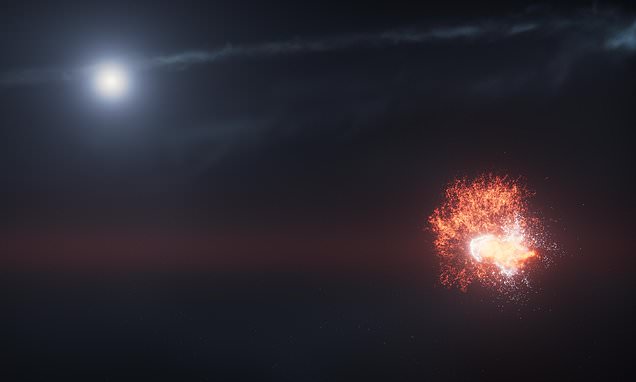
The Hubble Space Telescope has provided a rare look at the dramatic aftermath of two cosmic collisions, helping scientists resolve a decades-old astronomical puzzle. Initially, a bright spot near the young star Fomalhaut was thought to be a planet, but observations in 2023 revealed its disappearance and the emergence of a new celestial feature.
This phenomenon was identified as the dusty debris from two massive space rock impacts. These rocks, estimated to be at least 37 miles wide, collided to form dense dust clouds. Researchers believe such cataclysmic events near Fomalhaut happen infrequently, perhaps only once every 100,000 years.
The study, published in the journal Science, highlights the value of these observations for understanding planet formation, akin to viewing an early snapshot of our solar system. Scientists will continue to monitor the evolving dust cloud to better comprehend these violent cosmic processes.